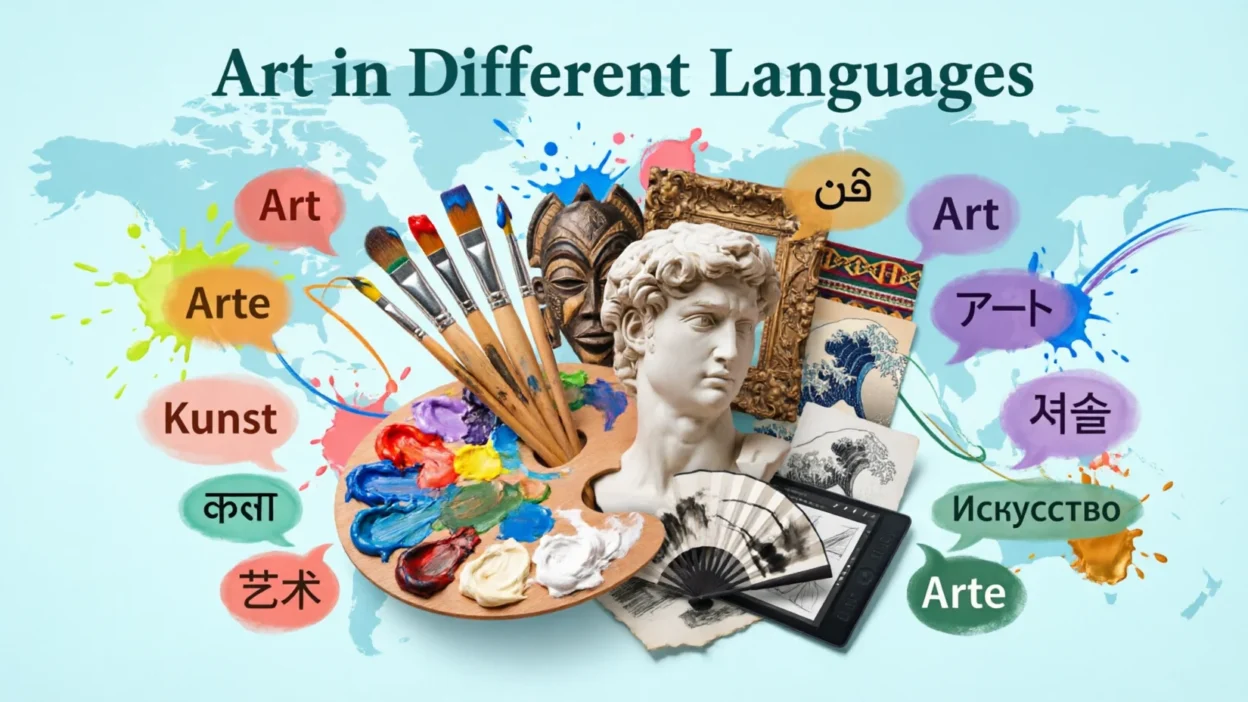
Learning art in different languages helps people discover how cultures express creativity through unique words and meanings. The word for art changes across world languages, global languages, worldwide languages, and other spoken languages, making each translation interesting to explore. A useful translation guide often includes language translations, translation examples, native words, and the correct translated word for better understanding.
Many learners improve their vocabulary and language learning skills by using a translation page that covers over 100 languages, 100 entries, and even more than 40 languages or 40 languages. Exploring art terminology in this way makes language study more engaging and practical.
A good page may offer valuable features such as audio pronunciation, word pronunciation, a pronunciation guide, and tools to pronounce unfamiliar terms correctly. These resources help users study language sounds, understand phonetics, and strengthen pronunciation learning through regular pronunciation practice.
Many platforms also include language audio so learners can read it while listening to native speakers. This supports language education, language study, and the growth of useful language knowledge for everyday communication.
Art in Different Languages Table
| Language | Native Phrase | Pronunciation | Example Sentence | English Meaning |
|---|---|---|---|---|
| English | Art | Ahrt | Art inspires people. | Art inspires people. |
| Spanish | Arte | Ar-teh | El arte es hermoso. | Art is beautiful. |
| French | Art | Ahr | L’art est important. | Art is important. |
| German | Kunst | Koonst | Kunst verbindet Menschen. | Art connects people. |
| Italian | Arte | Ar-teh | L’arte è ovunque. | Art is everywhere. |
| Portuguese | Arte | Ar-chee | A arte é criativa. | Art is creative. |
| Dutch | Kunst | Koonst | Kunst is inspirerend. | Art is inspiring. |
| Russian | Искусство | Iskusstvo | Искусство важно. | Art is important. |
| Ukrainian | Мистецтво | Mys-tet-stvo | Мистецтво прекрасне. | Art is wonderful. |
| Polish | Sztuka | Shtoo-ka | Sztuka inspiruje. | Art inspires. |
| Czech | Umění | Oo-menyi | Umění je krásné. | Art is beautiful. |
| Slovak | Umenie | Oo-meh-nye | Umenie spája ľudí. | Art connects people. |
| Hungarian | Művészet | Muu-ve-zet | A művészet fontos. | Art is important. |
| Romanian | Artă | Ar-tuh | Arta este minunată. | Art is wonderful. |
| Bulgarian | Изкуство | Iz-ku-stvo | Изкуството е красиво. | Art is beautiful. |
| Greek | Τέχνη | Teh-khnee | Η τέχνη εμπνέει. | Art inspires. |
| Turkish | Sanat | Sa-naht | Sanat önemlidir. | Art is important. |
| Arabic | فن | Fann | الفن جميل. | Art is beautiful. |
| Hebrew | אמנות | O-ma-noot | אמנות חשובה. | Art is important. |
| Persian | هنر | Ho-nar | هنر زیباست. | Art is beautiful. |
| Urdu | فن | Fun | فن خوبصورت ہے۔ | Art is beautiful. |
| Hindi | कला | Ka-laa | कला प्रेरित करती है। | Art inspires. |
| Bengali | শিল্প | Shil-po | শিল্প সুন্দর। | Art is beautiful. |
| Punjabi | ਕਲਾ | Ka-la | ਕਲਾ ਸੁੰਦਰ ਹੈ। | Art is beautiful. |
| Gujarati | કલા | Ka-la | કલા મહત્વપૂર્ણ છે. | Art is important. |
| Marathi | कला | Ka-la | कला प्रेरणा देते. | Art inspires. |
| Tamil | கலை | Ka-lai | கலை அழகானது. | Art is beautiful. |
| Telugu | కళ | Ka-la | కళ గొప్పది. | Art is great. |
| Kannada | ಕಲೆ | Ka-le | ಕಲೆ ಸುಂದರವಾಗಿದೆ. | Art is beautiful. |
| Malayalam | കല | Ka-la | കല പ്രധാനമാണ്. | Art is important. |
| Sinhala | කලාව | Ka-la-va | කලාව ලස්සනයි. | Art is beautiful. |
| Nepali | कला | Ka-la | कला सुन्दर छ। | Art is beautiful. |
| Chinese (Simplified) | 艺术 | Yi-shu | 艺术很美。 | Art is beautiful. |
| Chinese (Traditional) | 藝術 | Yi-shu | 藝術很重要。 | Art is important. |
| Japanese | 芸術 | Gei-jutsu | 芸術は美しいです。 | Art is beautiful. |
| Korean | 예술 | Ye-sul | 예술은 아름답습니다. | Art is beautiful. |
| Vietnamese | Nghệ thuật | Nghe thuat | Nghệ thuật rất đẹp. | Art is very beautiful. |
| Thai | ศิลปะ | Sin-la-pa | ศิลปะสวยงาม. | Art is beautiful. |
| Indonesian | Seni | Seh-nee | Seni itu indah. | Art is beautiful. |
| Malay | Seni | Seh-nee | Seni sangat penting. | Art is very important. |
| Filipino | Sining | Si-ning | Maganda ang sining. | Art is beautiful. |
| Swahili | Sanaa | Sa-naa | Sanaa ni nzuri. | Art is beautiful. |
| Zulu | Ubuciko | U-boo-see-ko | Ubuciko buhle. | Art is beautiful. |
| Xhosa | Ubugcisa | U-boo-gci-sa | Ubugcisa buhle. | Art is beautiful. |
| Afrikaans | Kuns | Kuns | Kuns is mooi. | Art is beautiful. |
| Amharic | ስነ-ጥበብ | Si-ne ti-beb | ስነ-ጥበብ ውብ ነው። | Art is beautiful. |
| Somali | Farshaxan | Far-sha-xan | Farshaxanku waa qurux. | Art is beautiful. |
| Hausa | Fasaha | Fa-sa-ha | Fasaha tana da kyau. | Art is beautiful. |
| Yoruba | Iṣẹ́ ọnà | Ee-she o-na | Iṣẹ́ ọnà lẹwa. | Art is beautiful. |
| Igbo | Nkà | Nka | Nkà mara mma. | Art is beautiful. |
| Finnish | Taide | Tai-de | Taide on kaunista. | Art is beautiful. |
| Swedish | Konst | Konst | Konst är viktigt. | Art is important. |
| Norwegian | Kunst | Koonst | Kunst er vakker. | Art is beautiful. |
| Danish | Kunst | Koonst | Kunst er vigtig. | Art is important. |
| Icelandic | List | List | List er falleg. | Art is beautiful. |
| Estonian | Kunst | Koonst | Kunst on ilus. | Art is beautiful. |
| Latvian | Māksla | Maaks-la | Māksla ir skaista. | Art is beautiful. |
| Lithuanian | Menas | Meh-nas | Menas yra gražus. | Art is beautiful. |
| Irish | Ealaín | Al-een | Tá ealaín álainn. | Art is beautiful. |
| Welsh | Celf | Kelf | Mae celf yn brydferth. | Art is beautiful. |
| Scottish Gaelic | Ealain | Al-an | Tha ealain brèagha. | Art is beautiful. |
| Basque | Artea | Ar-te-a | Artea ederra da. | Art is beautiful. |
| Catalan | Art | Ahrt | L’art és bonic. | Art is beautiful. |
| Galician | Arte | Ar-te | A arte é fermosa. | Art is beautiful. |
| Croatian | Umjetnost | Oo-myet-nost | Umjetnost je lijepa. | Art is beautiful. |
| Serbian | Уметност | Oo-met-nost | Уметност је лепа. | Art is beautiful. |
| Slovenian | Umetnost | Oo-met-nost | Umetnost je lepa. | Art is beautiful. |
| Albanian | Arti | Ar-tee | Arti është i bukur. | Art is beautiful. |
| Macedonian | Уметност | Oo-met-nost | Уметноста е убава. | Art is beautiful. |
| Armenian | Արվեստ | Ar-vest | Արվեստը գեղեցիկ է։ | Art is beautiful. |
| Georgian | ხელოვნება | Khe-lov-ne-ba | ხელოვნება ლამაზია. | Art is beautiful. |
How to Say Art in Different Languages
The word for art varies significantly from one language to another. While many European languages use terms similar to “art” or “arte,” others have unique words that reflect their cultural traditions. Learning these expressions can improve communication and deepen your appreciation of artistic heritage around the world.
Art Translations Around the World
Art translations reveal how different societies view creativity and expression. Whether it’s “Kunst” in German, “Sanat” in Turkish, “艺术” in Chinese, or “कला” in Hindi, every language offers a unique perspective on artistic creation.
Why Learn Art in All Languages?
There are many benefits to learning art in all languages:
- Improve multilingual vocabulary.
- Communicate with artists worldwide.
- Enhance travel experiences.
- Understand cultural diversity.
- Support language learning and education.
Common Uses of the Word Art
The word art is commonly used in:
- Museums and galleries
- Art schools and universities
- Creative industries
- Design and architecture
- Literature and performing arts
- International cultural exchanges
Conclusion
Understanding art in different languages is a fascinating way to explore global cultures and languages. From Europe and Asia to Africa and the Americas, the concept of art unites people through creativity and self-expression. These translations can help students, travelers, artists, and language enthusiasts communicate more effectively and appreciate artistic traditions around the world.
FAQs:
1. How do you say art in different languages?
Art is translated differently worldwide, such as Arte (Spanish), Kunst (German), Sanat (Turkish), and 艺术 (Chinese).
2. What is art in all languages?
There is no single word for art in all languages. Each language has its own translation based on cultural and linguistic traditions.
3. Why should I learn art translations?
Learning art translations helps improve communication, cultural awareness, and language skills.
4. What is the most common translation of art around the world?
Many Romance languages use variations of “Arte,” while Germanic languages often use forms of “Kunst.”
5. How can I remember art in different languages?
Practice using translations in sentences, create flashcards, and engage with multilingual art resources.