Whether you’re finishing a book, ending a movie, completing a presentation, or learning new languages, knowing how to say the end in different languages is both interesting and useful. Many cultures use unique expressions to mark the conclusion of a story, event, or journey.
In this guide, you’ll discover the end in all languages, including native translations, pronunciations, and practical examples. If you’ve ever wondered how to say the end in different languages, this comprehensive collection will help you explore the end translations used around the world.
The End in Different Languages Table
| # | Language | Native Phrase | Pronunciation | Example Sentence | English Meaning |
|---|---|---|---|---|---|
| 1 | English | The End | thee end | The movie ends with “The End.” | The movie finishes with “The End.” |
| 2 | Spanish | Fin | feen | La película termina con Fin. | The movie ends with The End. |
| 3 | French | Fin | fan | Le livre se termine par Fin. | The book ends with The End. |
| 4 | German | Ende | EN-duh | Der Film endet mit Ende. | The film ends with The End. |
| 5 | Italian | Fine | FEE-neh | Il racconto finisce con Fine. | The story ends with The End. |
| 6 | Portuguese | Fim | feem | O filme termina com Fim. | The film ends with The End. |
| 7 | Dutch | Einde | EYN-duh | Het boek eindigt met Einde. | The book ends with The End. |
| 8 | Russian | Конец | ka-NYETS | Фильм заканчивается словом Конец. | The film ends with The End. |
| 9 | Ukrainian | Кінець | kee-NETS | Фільм завершується словом Кінець. | The film ends with The End. |
| 10 | Polish | Koniec | KO-niets | Film kończy się słowem Koniec. | The film ends with The End. |
| 11 | Czech | Konec | KO-nets | Film končí slovem Konec. | The film ends with The End. |
| 12 | Slovak | Koniec | KO-niets | Film končí slovom Koniec. | The film ends with The End. |
| 13 | Hungarian | Vége | VAY-gheh | A film végén Vége áll. | The film ends with The End. |
| 14 | Romanian | Sfârșit | sfur-SHEET | Filmul se termină cu Sfârșit. | The film ends with The End. |
| 15 | Greek | Τέλος | TE-los | Η ταινία τελειώνει με Τέλος. | The movie ends with The End. |
| 16 | Turkish | Son | son | Film Son yazısıyla biter. | The film ends with The End. |
| 17 | Arabic | النهاية | an-ni-HA-ya | ينتهي الفيلم بـ النهاية. | The film ends with The End. |
| 18 | Hebrew | הסוף | ha-SOF | הסרט מסתיים עם הסוף. | The movie ends with The End. |
| 19 | Persian | پایان | pa-YAN | فیلم با پایان تمام میشود. | The film ends with The End. |
| 20 | Hindi | अंत | ant | फिल्म अंत से समाप्त होती है। | The film ends with The End. |
| 21 | Urdu | اختتام | ikh-ti-TAM | فلم اختتام پر ختم ہوتی ہے۔ | The film ends with The End. |
| 22 | Punjabi | ਅੰਤ | ant | ਫਿਲਮ ਅੰਤ ਨਾਲ ਖਤਮ ਹੁੰਦੀ ਹੈ। | The film ends with The End. |
| 23 | Bengali | শেষ | shesh | সিনেমা শেষ দিয়ে শেষ হয়। | The movie ends with The End. |
| 24 | Gujarati | અંત | ant | ફિલ્મ અંત સાથે પૂરી થાય છે. | The film ends with The End. |
| 25 | Marathi | शेवट | she-vat | चित्रपट शेवटने संपतो. | The movie ends with The End. |
| 26 | Tamil | முடிவு | mu-di-vu | படம் முடிவு என்று முடிகிறது. | The film ends with The End. |
| 27 | Telugu | ముగింపు | mu-gim-pu | సినిమా ముగింపుతో ముగుస్తుంది. | The movie ends with The End. |
| 28 | Kannada | ಅಂತ್ಯ | an-tya | ಚಿತ್ರ ಅಂತ್ಯದಿಂದ ಮುಗಿಯುತ್ತದೆ. | The film ends with The End. |
| 29 | Malayalam | അവസാനം | a-va-sa-nam | സിനിമ അവസാനം കൊണ്ട് തീരുന്നു. | The movie ends with The End. |
| 30 | Sinhala | අවසානය | a-va-sa-na-ya | චිත්රපටය අවසානයෙන් අවසන් වේ. | The film ends with The End. |
| 31 | Nepali | अन्त्य | an-tya | चलचित्र अन्त्यमा समाप्त हुन्छ। | The movie ends with The End. |
| 32 | Chinese (Simplified) | 结束 | jie-shu | 电影以结束结束。 | The movie ends with The End. |
| 33 | Chinese (Traditional) | 結束 | jie-shu | 電影以結束結尾。 | The movie ends with The End. |
| 34 | Japanese | 終わり | o-wa-ri | 映画は終わりで終わる。 | The movie ends with The End. |
| 35 | Korean | 끝 | kkeut | 영화는 끝으로 마무리된다. | The movie ends with The End. |
| 36 | Vietnamese | Kết thúc | ket thuc | Bộ phim kết thúc bằng Kết thúc. | The film ends with The End. |
| 37 | Thai | จบ | jop | หนังจบด้วยคำว่าจบ | The movie ends with The End. |
| 38 | Indonesian | Akhir | a-khir | Film berakhir dengan Akhir. | The film ends with The End. |
| 39 | Malay | Tamat | ta-mat | Filem tamat dengan Tamat. | The movie ends with The End. |
| 40 | Filipino | Wakas | wa-kas | Ang pelikula ay nagtatapos sa Wakas. | The movie ends with The End. |
| 41 | Swahili | Mwisho | mwee-sho | Filamu inaisha kwa Mwisho. | The film ends with The End. |
| 42 | Zulu | Isiphetho | isi-PHE-tho | Ifilimu iphela ngo Isiphetho. | The movie ends with The End. |
| 43 | Xhosa | Isiphelo | isi-PHE-lo | Ifilimu iphela ngo Isiphelo. | The film ends with The End. |
| 44 | Afrikaans | Einde | EYN-duh | Die film eindig met Einde. | The movie ends with The End. |
| 45 | Hausa | Ƙarshe | KAR-she | Fim ɗin ya ƙare da Ƙarshe. | The film ends with The End. |
| 46 | Yoruba | Ipari | ee-pa-ree | Fiimu naa pari pẹlu Ipari. | The movie ends with The End. |
| 47 | Igbo | Njedebe | nje-DE-be | Ihe nkiri kwụsịrị na Njedebe. | The movie ends with The End. |
| 48 | Amharic | መጨረሻ | me-cha-re-sha | ፊልሙ በመጨረሻ ይያበቃል። | The film ends with The End. |
| 49 | Somali | Dhammaad | dham-mad | Filimku wuxuu ku dhammaadaa Dhammaad. | The film ends with The End. |
| 50 | Finnish | Loppu | LOP-poo | Elokuva päättyy sanaan Loppu. | The movie ends with The End. |
| 51 | Swedish | Slut | sloot | Filmen slutar med Slut. | The movie ends with The End. |
| 52 | Norwegian | Slutt | sloot | Filmen ender med Slutt. | The film ends with The End. |
| 53 | Danish | Slut | sloot | Filmen slutter med Slut. | The film ends with The End. |
| 54 | Icelandic | Endir | EN-dir | Myndin endar með Endir. | The movie ends with The End. |
| 55 | Estonian | Lõpp | lup | Film lõpeb sõnaga Lõpp. | The film ends with The End. |
| 56 | Latvian | Beigas | bay-gas | Filma beidzas ar Beigas. | The movie ends with The End. |
| 57 | Lithuanian | Pabaiga | pa-BAI-ga | Filmas baigiasi žodžiu Pabaiga. | The film ends with The End. |
| 58 | Serbian | Крај | krai | Филм се завршава са Крај. | The movie ends with The End. |
| 59 | Croatian | Kraj | krai | Film završava s Kraj. | The movie ends with The End. |
| 60 | Bosnian | Kraj | krai | Film završava sa Kraj. | The movie ends with The End. |
| 61 | Slovenian | Konec | KO-nets | Film se konča z Konec. | The film ends with The End. |
| 62 | Albanian | Fundi | FUN-dee | Filmi mbaron me Fundi. | The movie ends with The End. |
| 63 | Georgian | დასასრული | da-sa-sru-li | ფილმი მთავრდება დასასრული-თ. | The film ends with The End. |
| 64 | Armenian | Վերջ | verj | Ֆիլմն ավարտվում է Վերջ բառով։ | The movie ends with The End. |
| 65 | Azerbaijani | Son | son | Film Son ilə bitir. | The film ends with The End. |
| 66 | Kazakh | Соңы | so-NI | Фильм Соңы сөзімен аяқталады. | The film ends with The End. |
| 67 | Uzbek | Oxiri | o-khi-ri | Film Oxiri bilan tugaydi. | The movie ends with The End. |
| 68 | Mongolian | Төгсгөл | tug-sgul | Кино Төгсгөл гэж дуусна. | The movie ends with The End. |
| 69 | Irish | Deireadh | DER-ah | Críochnaíonn an scannán le Deireadh. | The film ends with The End. |
| 70 | Welsh | Diwedd | DEE-vedh | Mae’r ffilm yn gorffen gyda Diwedd. | The movie ends with The End. |
Why Learn “The End” in Different Languages?
Learning how to say the end in different languages helps language learners, travelers, writers, translators, and cultural enthusiasts understand how stories and media conclude across different cultures.
Benefits include:
- Expanding vocabulary in multiple languages
- Understanding foreign books and films
- Improving translation skills
- Learning cultural expressions
- Enhancing multilingual communication
How Is “The End” Used Around the World?
The phrase is commonly used in:
- Movies and television productions
- Storybooks and novels
- Theater performances
- Presentations and speeches
- Educational materials
- Creative writing projects
Although many languages have direct translations, some cultures use alternative expressions that mean “completion,” “conclusion,” or “finale.”
The End Translations and Cultural Significance
The concept of an ending exists in every language. However, the wording can vary depending on context.
For example:
- Romance languages often use words derived from Latin roots meaning “finish.”
- Germanic languages frequently use terms meaning “end” or “finish.”
- Asian languages often use characters or words representing completion or conclusion.
- Middle Eastern languages commonly use expressions meaning finality or closure.
These variations make studying the end around the world both educational and fascinating.
Common Situations Where You May Need “The End” Translations
You may need these translations when:
- Writing multilingual content
- Creating subtitles
- Translating books
- Designing educational materials
- Learning foreign languages
- Traveling internationally
- Producing films and videos
Having access to the end in all languages can save time and improve communication accuracy.
Conclusion
Knowing the end in different languages provides valuable insight into global communication and cultural expression. Whether you’re studying languages, translating content, or simply curious about linguistic diversity, these 70 translations offer a useful reference for understanding how people express the idea of an ending around the world.
FAQs
1. How do you say “the end” in different languages?
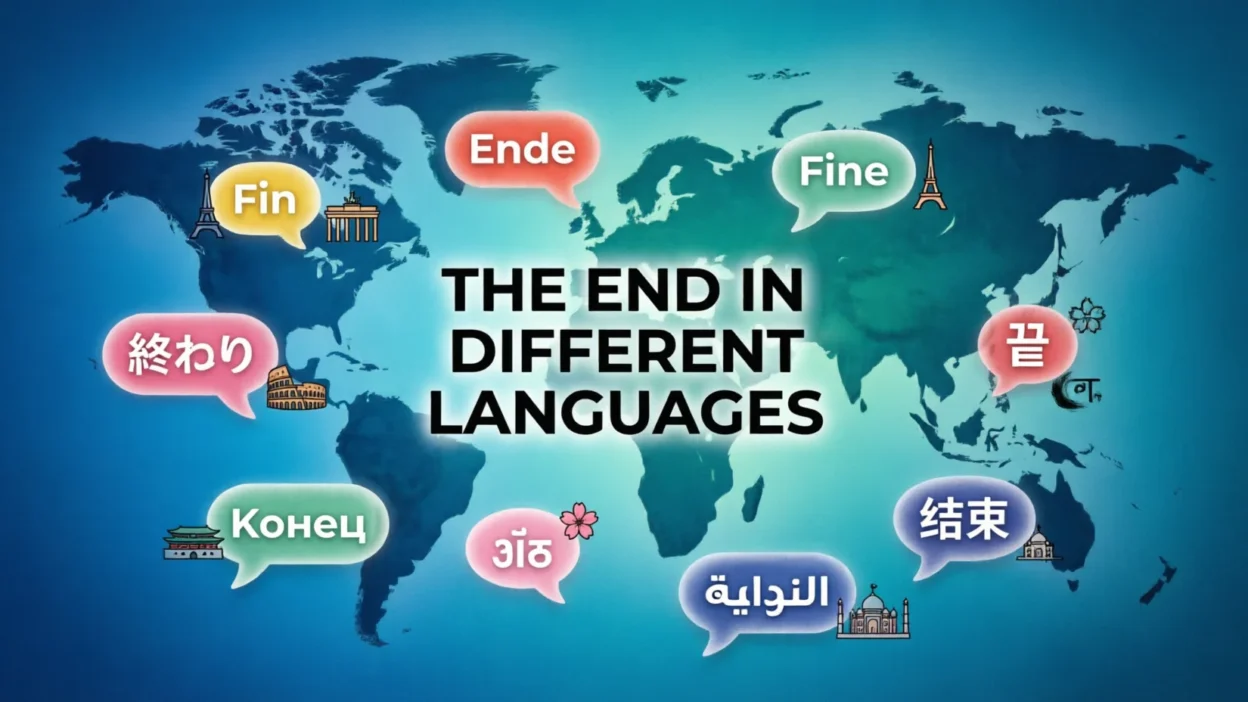
“The end” can be expressed as Fin (Spanish), Ende (German), Fine (Italian), 終わり (Japanese), 끝 (Korean), and many other translations depending on the language.
2. What is the most common translation of “the end” worldwide?
Many languages use a direct word meaning “end,” “finish,” or “conclusion,” though the exact wording varies by culture and language family.
3. Why is “the end” used in books and movies?
It signals that the story, film, or presentation has concluded and no further content follows.
4. Are there different ways to say “the end” in the same language?
Yes. Some languages have multiple words depending on whether the context is a story ending, project completion, or final conclusion.
5. Is learning “the end” in different languages useful?
Yes. It helps language learners, translators, travelers, writers, and anyone interested in multilingual communication.