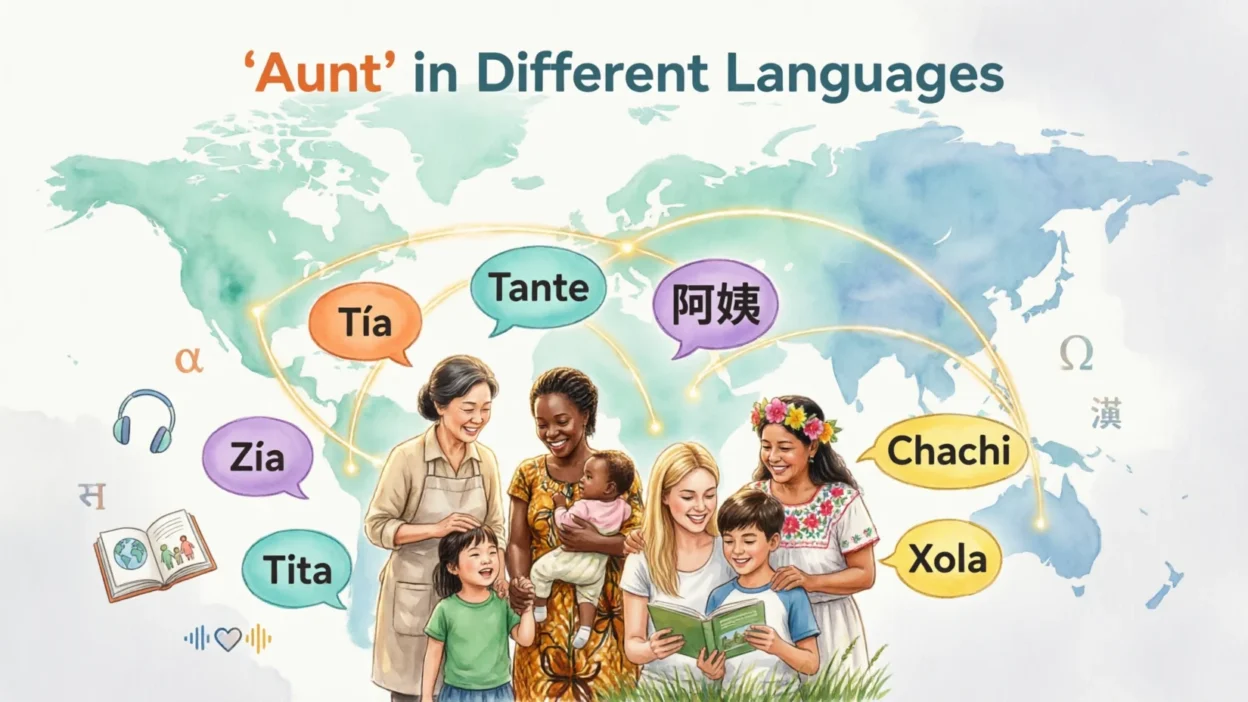
Exploring aunt in different languages is a simple and interesting way to discover how people communicate around the world. Learning family vocabulary helps language learners understand cultural differences, and each translation of the word aunt can reveal something unique about different cultures and languages.
Many language resources and guides feature useful examples that show different ways to say, pronounce, and use this common word. You can find aunt translated in over 100 languages, while audio pronunciation tools allow readers to listen to the correct sound instead of relying only on spelling.
Hearing aunt spoken in more than 40 languages can improve understanding, build confidence, support global communication, help people compare vocabulary, practice pronunciation, and recognize how families communicate around the world in everyday language settings.
How to Say Aunt in Different Languages
| Language | Native Phrase | Pronunciation | Example Sentence | English Meaning |
|---|---|---|---|---|
| English | Aunt | Ant | My aunt is visiting today. | My aunt is visiting today. |
| Spanish | Tía | Tee-ah | Mi tía vive en Madrid. | My aunt lives in Madrid. |
| French | Tante | Tont | Ma tante est gentille. | My aunt is kind. |
| German | Tante | Tan-tuh | Meine Tante kocht gut. | My aunt cooks well. |
| Italian | Zia | Zee-ah | Mia zia è simpatica. | My aunt is friendly. |
| Portuguese | Tia | Tee-ah | Minha tia mora aqui. | My aunt lives here. |
| Dutch | Tante | Tan-tuh | Mijn tante leest boeken. | My aunt reads books. |
| Swedish | Moster | Mos-ter | Min moster är lärare. | My aunt is a teacher. |
| Norwegian | Tante | Tan-tuh | Min tante besøker oss. | My aunt visits us. |
| Danish | Tante | Tan-tuh | Min tante arbejder her. | My aunt works here. |
| Finnish | Täti | Tah-ti | Tätini on ystävällinen. | My aunt is friendly. |
| Icelandic | Frænka | Frine-ka | Frænka mín syngur. | My aunt sings. |
| Russian | Тётя | Tyo-tya | Моя тётя добрая. | My aunt is kind. |
| Ukrainian | Тітка | Tit-ka | Моя тітка тут. | My aunt is here. |
| Belarusian | Цётка | Tsyot-ka | Мая цётка прыйшла. | My aunt arrived. |
| Polish | Ciocia | Cho-cha | Moja ciocia mieszka blisko. | My aunt lives nearby. |
| Czech | Teta | Te-ta | Moje teta je veselá. | My aunt is cheerful. |
| Slovak | Teta | Te-ta | Moja teta varí. | My aunt cooks. |
| Slovenian | Teta | Te-ta | Moja teta bere. | My aunt reads. |
| Croatian | Teta | Te-ta | Moja teta radi ovdje. | My aunt works here. |
| Serbian | Тетка | Tet-ka | Моја тетка долази. | My aunt is coming. |
| Bosnian | Tetka | Tet-ka | Moja tetka pjeva. | My aunt sings. |
| Macedonian | Тетка | Tet-ka | Мојата тетка е тука. | My aunt is here. |
| Bulgarian | Леля | Le-lya | Леля ми е мила. | My aunt is nice. |
| Greek | Θεία | Thee-a | Η θεία μου γελάει. | My aunt is laughing. |
| Albanian | Teze | Te-ze | Tezja ime erdhi. | My aunt arrived. |
| Romanian | Mătușă | Ma-tu-sha | Mătușa mea locuiește këtu. | My aunt lives here. |
| Turkish | Teyze | Tay-ze | Teyzem geldi. | My aunt came. |
| Arabic | عمة | Am-mah | عمتي هنا. | My aunt is here. |
| Hebrew | דודה | Do-da | הדודה שלי נחמדה. | My aunt is nice. |
| Persian | عمه | Ameh | عمه من اینجاست. | My aunt is here. |
| Kurdish | Xaltî | Khal-tee | Xaltî min hat. | My aunt came. |
| Hindi | चाची | Cha-chee | मेरी चाची आई हैं। | My aunt has come. |
| Urdu | خالہ | Kha-la | میری خالہ یہاں ہیں۔ | My aunt is here. |
| Punjabi | ਮਾਸੀ | Maa-see | ਮੇਰੀ ਮਾਸੀ ਆਈ ਹੈ। | My aunt has arrived. |
| Bengali | খালা | Kha-la | আমার খালা এসেছেন। | My aunt has come. |
| Gujarati | માસી | Maa-see | મારી માસી આવી છે. | My aunt has arrived. |
| Marathi | मावशी | Maav-shee | माझी मावशी आली. | My aunt came. |
| Tamil | அத்தை | Ath-thai | என் அத்தை வந்தார். | My aunt came. |
| Telugu | అత్త | At-ta | నా అత్త వచ్చింది. | My aunt came. |
| Kannada | ಅತ್ತೆ | At-the | ನನ್ನ ಅತ್ತೆ ಬಂದರು. | My aunt came. |
| Malayalam | അമ്മായി | Am-ma-yi | എന്റെ അമ്മായി വന്നു. | My aunt came. |
| Sinhala | නැන්දා | Nen-da | මගේ නැන්දා ආවා. | My aunt came. |
| Nepali | फुपू | Phu-poo | मेरी फुपू आउनुभयो। | My aunt came. |
| Chinese (Mandarin) | 阿姨 | Ah-yee | 我的阿姨来了。 | My aunt came. |
| Cantonese | 阿姨 | Ah-yee | 我阿姨嚟咗。 | My aunt came. |
| Japanese | おば | O-ba | おばが来ました。 | My aunt came. |
| Korean | 이모 | Ee-mo | 이모가 왔어요. | My aunt came. |
| Vietnamese | Cô | Koh | Cô tôi đến rồi. | My aunt arrived. |
| Thai | ป้า | Pah | ป้าของฉันมาแล้ว | My aunt has arrived. |
| Lao | ປ້າ | Paa | ປ້າມາແລ້ວ | My aunt came. |
| Khmer | មីង | Ming | មីងមកហើយ។ | My aunt arrived. |
| Indonesian | Bibi | Bee-bee | Bibi datang hari ini. | My aunt came today. |
| Malay | Mak Cik | Mak Cheek | Mak cik datang. | My aunt came. |
| Filipino | Tita | Tee-ta | Dumating ang tita ko. | My aunt arrived. |
| Javanese | Bude | Boo-day | Bude teka. | My aunt came. |
| Burmese | အဒေါ် | A-daw | အဒေါ်ရောက်လာတယ်။ | My aunt arrived. |
| Mongolian | Авга эгч | Av-ga Ej | Авга эгч ирлээ. | My aunt came. |
| Kazakh | Тәте | Ta-te | Тәтем келді. | My aunt came. |
| Uzbek | Xola | Kho-la | Xolam keldi. | My aunt came. |
| Turkmen | Daýza | Die-za | Daýzam geldi. | My aunt came. |
| Azerbaijani | Xala | Kha-la | Xalam gəldi. | My aunt came. |
| Georgian | დეიდა | Day-da | დეიდა მოვიდა. | My aunt came. |
| Armenian | Մորաքույր | Mo-ra-kooyr | Մորաքույրս եկավ։ | My aunt came. |
| Swahili | Shangazi | Shan-ga-zi | Shangazi yangu amefika. | My aunt arrived. |
| Zulu | U-anti | Oo-an-tee | U-anti ufikile. | My aunt arrived. |
| Xhosa | Anti | An-tee | Anti ufikile. | My aunt arrived. |
| Afrikaans | Tannie | Tan-nee | My tannie kom vandag. | My aunt comes today. |
| Yoruba | Anti | An-tee | Anti mi wa nibi. | My aunt is here. |
| Igbo | Nne Nta | Neh N-ta | Nne nta bịara. | My aunt came. |
| Hausa | Gwaggo | Gwag-go | Gwaggo ta zo. | My aunt came. |
| Malagasy | Nenitoa | Ne-nee-toa | Tonga ny nenitoa. | My aunt arrived. |
Aunt Translations Around the World
The word for aunt varies greatly across cultures and language families. Some languages use a single word for all aunts, while others distinguish between maternal and paternal aunts. For example, Hindi, Urdu, Punjabi, and several South Asian languages often have different words depending on the family relationship.
Learning aunt in different languages helps language learners understand cultural traditions and family structures while expanding their vocabulary.
Why Learn Family Words in Multiple Languages?
Family vocabulary is essential in everyday conversations. Knowing how to say aunt in all languages can help when:
- Traveling internationally
- Learning a new language
- Communicating with relatives abroad
- Understanding cultural traditions
- Improving multilingual vocabulary
Because family terms are frequently used, they are often among the easiest and most practical words to memorize.
How Different Cultures Refer to Aunts
Many cultures place special importance on extended family members. In some countries, aunts play a major role in childcare, celebrations, and family decision-making. As a result, several languages have unique and highly specific terms that indicate whether the aunt is related through the mother or father.
These linguistic differences make aunt translations an interesting subject for anyone exploring languages and cultures around the world.
Conclusion
Learning aunt in different languages is a simple way to explore global cultures and expand your language skills. From Spanish Tía and French Tante to Chinese 阿姨 and Arabic عمة, these words highlight the diversity of family expressions used around the world. If you are studying languages, traveling, or researching family vocabulary, these translations provide a useful reference for understanding how people refer to an aunt across many cultures.
FAQs:
1. How do you say aunt in different languages?
Aunt is expressed differently around the world, including Tía in Spanish, Tante in French, Zia in Italian, 阿姨 in Chinese, and Tita in Filipino.
2. What is the most common translation of aunt worldwide?
Common translations include Tante, Tía, Tia, Tetka, and similar family-related terms used across Europe and other regions.
3. Why do some languages have multiple words for aunt?
Many languages distinguish between maternal and paternal aunts, reflecting family relationships and cultural traditions.
4. How can I learn aunt translations quickly?
Using tables, pronunciation guides, and example sentences is one of the fastest ways to remember aunt translations in different languages.
5. Why is learning family vocabulary important?
Family words are frequently used in daily conversations, making them essential for communication and language learning.