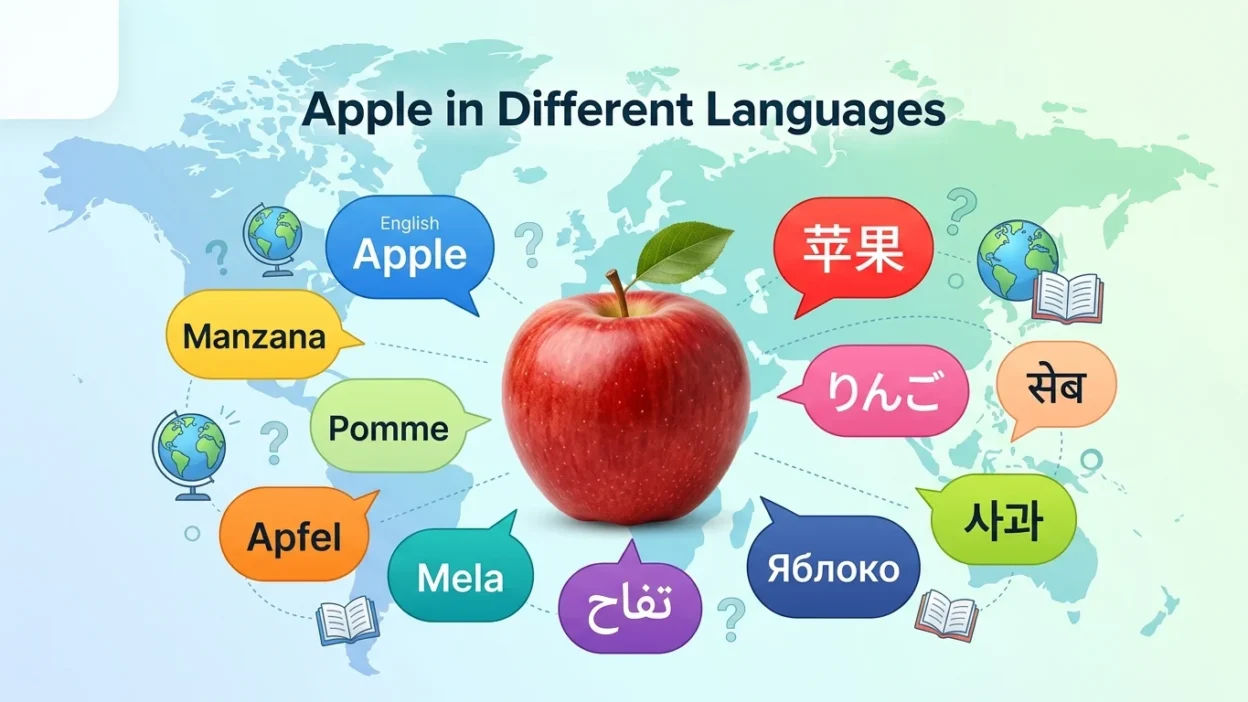
Exploring apple in different languages is a fun way to improve language learning and grow your vocabulary. This page features many ways to say apple, including how to say apple through translation, translations, language translation, translated apple, and a translated word in various languages.
Learning the native word, its word meaning, and the correct native phrase helps learners understand spoken languages, written languages, foreign languages, global languages, international languages, and world languages. Comparing the same word across languages can make language study more practical and enjoyable.
A quality language guide often includes audio, pronunciation, pronunciation guide, and pronunciation audio to help learners pronounce words correctly. Through read practice, reading words, and active listening, people can improve speech, communication, and communication skills.
Using a trusted language resource, linguistic resource, and language reference supports language knowledge, language education, language diversity, language comparison, and language exploration across different cultures.
Apple in Different Languages Table
| Language | Native Word | Pronunciation | Example Sentence | English Meaning |
|---|---|---|---|---|
| English | Apple | AP-ul | I eat an apple every day. | I eat an apple every day. |
| Spanish | Manzana | mahn-SAH-nah | Como una manzana. | I eat an apple. |
| French | Pomme | pom | Je mange une pomme. | I eat an apple. |
| German | Apfel | AHP-fel | Ich esse einen Apfel. | I eat an apple. |
| Italian | Mela | MEH-lah | Mangio una mela. | I eat an apple. |
| Portuguese | Maçã | mah-SAN | Eu como uma maçã. | I eat an apple. |
| Dutch | Appel | AH-pel | Ik eet een appel. | I eat an apple. |
| Swedish | Äpple | EHP-leh | Jag äter ett äpple. | I eat an apple. |
| Norwegian | Eple | EP-leh | Jeg spiser et eple. | I eat an apple. |
| Danish | Æble | EH-bleh | Jeg spiser et æble. | I eat an apple. |
| Finnish | Omena | OH-meh-nah | Syön omenan. | I eat an apple. |
| Icelandic | Epli | EP-li | Ég borða epli. | I eat an apple. |
| Irish | Úll | OOL | Ithim úll. | I eat an apple. |
| Welsh | Afal | AV-al | Rwy’n bwyta afal. | I eat an apple. |
| Scottish Gaelic | Ubhal | OO-al | Tha mi ag ithe ubhal. | I eat an apple. |
| Russian | Яблоко | YAB-la-ka | Я ем яблоко. | I eat an apple. |
| Ukrainian | Яблуко | YAB-loo-ko | Я їм яблуко. | I eat an apple. |
| Belarusian | Яблык | YA-blik | Я ем яблык. | I eat an apple. |
| Polish | Jabłko | YAB-ko | Jem jabłko. | I eat an apple. |
| Czech | Jablko | YABL-ko | Jím jablko. | I eat an apple. |
| Slovak | Jablko | YABL-ko | Jem jablko. | I eat an apple. |
| Slovenian | Jabolko | ya-BOL-ko | Jem jabolko. | I eat an apple. |
| Croatian | Jabuka | ya-BOO-ka | Jedem jabuku. | I eat an apple. |
| Serbian | Јабука | ya-BOO-ka | Једем јабуку. | I eat an apple. |
| Bosnian | Jabuka | ya-BOO-ka | Jedem jabuku. | I eat an apple. |
| Bulgarian | Ябълка | YA-bal-ka | Ям ябълка. | I eat an apple. |
| Macedonian | Јаболко | ya-BOL-ko | Јадам јаболко. | I eat an apple. |
| Greek | Μήλο | MEE-lo | Τρώω ένα μήλο. | I eat an apple. |
| Albanian | Mollë | MOL-uh | Ha një mollë. | I eat an apple. |
| Romanian | Măr | MER | Mănânc un măr. | I eat an apple. |
| Hungarian | Alma | AL-ma | Eszem egy almát. | I eat an apple. |
| Turkish | Elma | EL-ma | Bir elma yiyorum. | I eat an apple. |
| Azerbaijani | Alma | AL-ma | Alma yeyirəm. | I eat an apple. |
| Kazakh | Алма | AL-ma | Мен алма жеймін. | I eat an apple. |
| Uzbek | Olma | OL-ma | Men olma yeyman. | I eat an apple. |
| Turkmen | Alma | AL-ma | Men alma iýýärin. | I eat an apple. |
| Arabic | تفاح | tuf-TAH | آكل تفاحة. | I eat an apple. |
| Hebrew | תפוח | ta-POO-akh | אני אוכל תפוח. | I eat an apple. |
| Persian | سیب | SEEB | من سیب میخورم. | I eat an apple. |
| Kurdish | Sêv | SEV | Ez sêv dixwim. | I eat an apple. |
| Hindi | सेब | SEB | मैं सेब खाता हूँ। | I eat an apple. |
| Urdu | سیب | SEB | میں سیب کھاتا ہوں۔ | I eat an apple. |
| Punjabi | ਸੇਬ | SEB | ਮੈਂ ਸੇਬ ਖਾਂਦਾ ਹਾਂ। | I eat an apple. |
| Bengali | আপেল | A-pel | আমি আপেল খাই। | I eat an apple. |
| Gujarati | સફરજન | sa-fa-ra-jan | હું સફરજન ખાઉં છું. | I eat an apple. |
| Marathi | सफरचंद | sa-fa-ra-chand | मी सफरचंद खातो. | I eat an apple. |
| Nepali | स्याउ | SYAU | म स्याउ खान्छु। | I eat an apple. |
| Sinhala | ඇපල් | AE-pal | මම ඇපල් කනවා. | I eat an apple. |
| Tamil | ஆப்பிள் | AA-pil | நான் ஆப்பிள் சாப்பிடுகிறேன். | I eat an apple. |
| Telugu | ఆపిల్ | AA-pil | నేను ఆపిల్ తింటాను. | I eat an apple. |
| Kannada | ಆಪಲ್ | AA-pal | ನಾನು ಆಪಲ್ ತಿನ್ನುತ್ತೇನೆ. | I eat an apple. |
| Malayalam | ആപ്പിൾ | AA-peel | ഞാൻ ആപ്പിൾ കഴിക്കുന്നു. | I eat an apple. |
| Chinese (Mandarin) | 苹果 | PING-gwo | 我吃苹果。 | I eat an apple. |
| Cantonese | 蘋果 | PING-gwo | 我食蘋果。 | I eat an apple. |
| Japanese | りんご | RIN-go | りんごを食べます。 | I eat an apple. |
| Korean | 사과 | SA-gwa | 사과를 먹어요. | I eat an apple. |
| Vietnamese | Táo | TAO | Tôi ăn táo. | I eat an apple. |
| Thai | แอปเปิล | AEP-pern | ฉันกินแอปเปิล. | I eat an apple. |
| Indonesian | Apel | AH-pel | Saya makan apel. | I eat an apple. |
| Malay | Epal | EH-pal | Saya makan epal. | I eat an apple. |
| Filipino | Mansanas | man-SA-nas | Kumakain ako ng mansanas. | I eat an apple. |
| Khmer | ផ្លែប៉ោម | PHLAE-pom | ខ្ញុំញ៉ាំផ្លែប៉ោម។ | I eat an apple. |
| Lao | ຫມາກໂປມ | MAK-pom | ຂ້ອຍກິນຫມາກໂປມ. | I eat an apple. |
| Burmese | ပန်းသီး | PAN-thee | ကျွန်တော် ပန်းသီးစားတယ်။ | I eat an apple. |
| Mongolian | Алим | A-lim | Би алим иддэг. | I eat an apple. |
| Swahili | Tufaha | too-FA-ha | Ninakula tufaha. | I eat an apple. |
| Zulu | Ihhabhula | ee-ha-BU-la | Ngidla ihhabhula. | I eat an apple. |
| Afrikaans | Appel | AH-pel | Ek eet ‘n appel. | I eat an apple. |
| Hausa | Tuffa | TOOF-fa | Ina cin tuffa. | I eat an apple. |
| Amharic | ፖም | POM | ፖም እበላለሁ። | I eat an apple. |
| Somali | Tufaax | too-FAAX | Waxaan cunaa tufaax. | I eat an apple. |
| Malagasy | Paoma | pa-O-ma | Mihinana paoma aho. | I eat an apple. |
How to Say Apple in Different Languages
The word for apple changes from one language to another, but many languages have similar sounds because of shared history and cultural connections. For example, Alma is used in several Central Asian languages, while Apel or Appel appears in multiple European and Southeast Asian languages.
Learning apple translations is a great way to improve vocabulary and understand how languages are connected around the world.
Why Learn Apple in All Languages?
Knowing how to say apple in different languages can help you:
- Build multilingual vocabulary
- Improve language-learning skills
- Communicate while traveling
- Teach children basic foreign words
- Explore global cultures and traditions
Because apples are common worldwide, they are often among the first fruit names taught in language courses.
Apple Around the World
Apples are grown and enjoyed in many countries. From Europe and Asia to Africa and the Americas, this fruit is part of countless recipes, traditions, and daily meals. As a result, the word apple has unique translations in nearly every language.
Whether you are studying Spanish, Chinese, Arabic, Hindi, French, or Japanese, learning the local word for apple is a useful first step in expanding your language knowledge.
Conclusion
Learning apple in different languages is an enjoyable way to discover new cultures and expand your vocabulary. The 70 translations listed above show how one simple fruit can have many names across the world. Use these words in conversations, travel experiences, and language-learning activities to improve your communication skills.
FAQs:
1. How do you say apple in different languages?
Apple has different translations worldwide, including Manzana in Spanish, Pomme in French, Apfel in German, and Seeb in Hindi and Urdu.
2. What is apple in all languages?
There is no single universal word for apple. Every language has its own translation, pronunciation, and writing system.
3. How do you pronounce apple in Japanese?
Apple in Japanese is りんご, pronounced as RIN-go.
4. What is the Chinese word for apple?
In Mandarin Chinese, apple is 苹果, pronounced PING-gwo.
5. Why are apple translations useful?
Apple translations help language learners improve vocabulary, understand cultures, and communicate more effectively while traveling.

Roman Miles is an author at Lingoboxes, a language learning platform. He writes clear and engaging articles that help readers understand different languages, grammar rules, vocabulary, and cultural expressions effectively.