
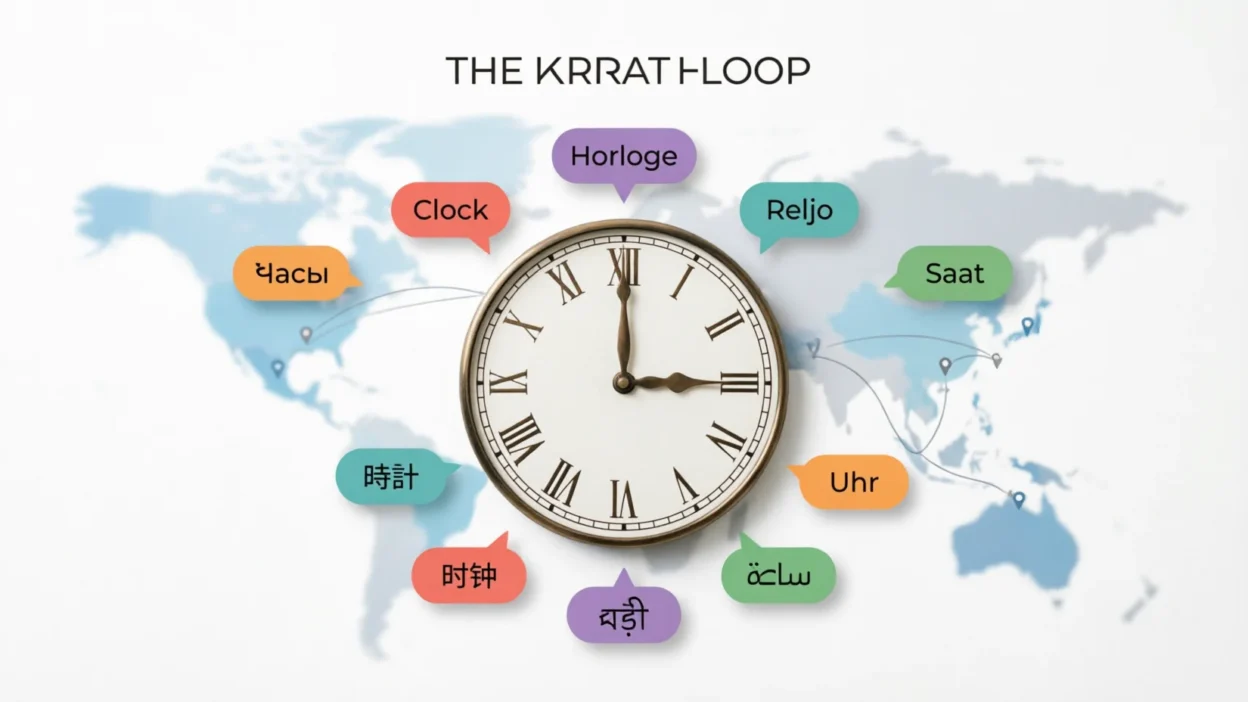
If you want to learn the word clock in different languages, this page features many ways to say it with confidence. It provides translation and translations in over 100 languages, making it useful for students, travelers, and anyone interested in expanding their language skills. I have found that comparing the same word across different languages helps improve memory and makes learning more enjoyable.
You can listen to audio pronunciation, read examples, and then pronounce the word naturally. This simple approach builds confidence while helping you recognize patterns between languages. Whether you are studying one language or many, clock in different languages offers a practical way to improve vocabulary, strengthen pronunciation, and enjoy learning at your own pace.
Clock in Different Languages Table
| Language | Native Translation | Pronunciation | Example Sentence | English Meaning |
|---|---|---|---|---|
| English | Clock | Klok | The clock is on the wall. | The clock is on the wall. |
| Spanish | Reloj | reh-LOH | El reloj está en la pared. | The clock is on the wall. |
| French | Horloge | or-LOZH | L’horloge est grande. | The clock is big. |
| German | Uhr | Oor | Die Uhr hängt an der Wand. | The clock hangs on the wall. |
| Italian | Orologio | oh-roh-LOH-joh | L’orologio è nuovo. | The clock is new. |
| Portuguese | Relógio | heh-LOH-zhyoo | O relógio funciona bem. | The clock works well. |
| Dutch | Klok | Klok | De klok is oud. | The clock is old. |
| Swedish | Klocka | KLOK-ah | Klockan är rund. | The clock is round. |
| Norwegian | Klokke | KLOK-eh | Klokken tikker. | The clock is ticking. |
| Danish | Ur | Oor | Uret er på bordet. | The clock is on the table. |
| Finnish | Kello | KEL-lo | Kello käy hyvin. | The clock runs well. |
| Icelandic | Klukka | KLOOT-ka | Klukkan er falleg. | The clock is beautiful. |
| Irish | Clog | Klug | Tá an clog mór. | The clock is large. |
| Welsh | Cloc | Klok | Mae’r cloc yn hen. | The clock is old. |
| Scottish Gaelic | Cloc | Klok | Tha an cloc ùr. | The clock is new. |
| Polish | Zegar | ZEH-gar | Zegar jest duży. | The clock is big. |
| Czech | Hodiny | HO-dee-nee | Hodiny jsou nové. | The clock is new. |
| Slovak | Hodiny | HO-dee-nee | Hodiny visia na stene. | The clock hangs on the wall. |
| Hungarian | Óra | OH-rah | Az óra szép. | The clock is beautiful. |
| Romanian | Ceas | Chas | Ceasul merge bine. | The clock works well. |
| Bulgarian | Часовник | cha-SOV-nik | Часовникът е нов. | The clock is new. |
| Serbian | Сат | Saht | Сат је на зиду. | The clock is on the wall. |
| Croatian | Sat | Saht | Sat je velik. | The clock is big. |
| Bosnian | Sat | Saht | Sat radi dobro. | The clock works well. |
| Slovenian | Ura | OO-ra | Ura je lepa. | The clock is beautiful. |
| Russian | Часы | cha-SY | Часы на стене. | The clock is on the wall. |
| Ukrainian | Годинник | ho-DYN-nyk | Годинник новий. | The clock is new. |
| Belarusian | Гадзіннік | ha-DZIN-neek | Гадзіннік працуе. | The clock works. |
| Lithuanian | Laikrodis | lie-KRO-dis | Laikrodis tiksi. | The clock is ticking. |
| Latvian | Pulkstenis | POOLKS-te-nis | Pulkstenis ir jauns. | The clock is new. |
| Estonian | Kell | Kell | Kell on seinal. | The clock is on the wall. |
| Greek | Ρολόι | ro-LOI | Το ρολόι είναι μεγάλο. | The clock is big. |
| Turkish | Saat | Saat | Saat duvarda. | The clock is on the wall. |
| Arabic | ساعة | Saa-ah | الساعة جديدة. | The clock is new. |
| Hebrew | שעון | Sha-on | השעון על הקיר. | The clock is on the wall. |
| Persian | ساعت | Saa-at | ساعت بزرگ است. | The clock is big. |
| Urdu | گھڑی | Ghuh-ree | گھڑی دیوار پر ہے۔ | The clock is on the wall. |
| Hindi | घड़ी | Gha-ree | घड़ी नई है। | The clock is new. |
| Bengali | ঘড়ি | Gho-ri | ঘড়িটি বড়। | The clock is big. |
| Punjabi | ਘੜੀ | Gha-ree | ਘੜੀ ਕੰਧ ‘ਤੇ ਹੈ। | The clock is on the wall. |
| Gujarati | ઘડિયાળ | Gha-di-yaal | ઘડિયાળ નવી છે. | The clock is new. |
| Marathi | घड्याळ | Gha-dyaal | घड्याळ भिंतीवर आहे. | The clock is on the wall. |
| Nepali | घडी | Gha-dee | घडी नयाँ छ। | The clock is new. |
| Sinhala | ඔරලෝසුව | ora-LO-su-wa | ඔරලෝසුව අලුත්ය. | The clock is new. |
| Tamil | கடிகாரம் | Ka-di-gaa-ram | கடிகாரம் சுவரில் உள்ளது. | The clock is on the wall. |
| Telugu | గడియారం | Ga-di-yaa-ram | గడియారం కొత్తది. | The clock is new. |
| Kannada | ಗಡಿಯಾರ | Ga-di-ya-ra | ಗಡಿಯಾರ ಹೊಸದು. | The clock is new. |
| Malayalam | ഘടികാരം | Gha-di-kaa-ram | ഘടികാരം വലുതാണ്. | The clock is big. |
| Assamese | ঘড়ী | Gho-ri | ঘড়ী নতুন। | The clock is new. |
| Odia | ଘଡ଼ି | Gha-di | ଘଡ଼ି ବଡ଼ ଅଟେ। | The clock is big. |
| Chinese (Simplified) | 时钟 | Shir-jong | 时钟在墙上。 | The clock is on the wall. |
| Chinese (Traditional) | 時鐘 | Shir-jong | 時鐘很大。 | The clock is big. |
| Japanese | 時計 | To-kei | 時計は新しいです。 | The clock is new. |
| Korean | 시계 | Shi-gye | 시계가 벽에 있습니다. | The clock is on the wall. |
| Vietnamese | Đồng hồ | Dong-ho | Đồng hồ mới. | The clock is new. |
| Thai | นาฬิกา | Naa-li-gaa | นาฬิกาอยู่บนผนัง | The clock is on the wall. |
| Indonesian | Jam | Jahm | Jam itu baru. | The clock is new. |
| Malay | Jam | Jahm | Jam itu besar. | The clock is big. |
| Filipino | Orasan | oh-RA-san | Ang orasan ay bago. | The clock is new. |
| Javanese | Jam | Jahm | Jam ana ing tembok. | The clock is on the wall. |
| Burmese | နာရီ | Na-yee | နာရီအသစ်ဖြစ်သည်။ | The clock is new. |
| Khmer | នាឡិកា | Na-li-ka | នាឡិកាថ្មី។ | The clock is new. |
| Lao | ໂມງ | Mohng | ໂມງໃໝ່. | The clock is new. |
| Mongolian | Цаг | Tsag | Цаг шинэ. | The clock is new. |
| Kazakh | Сағат | Sa-ghat | Сағат жаңа. | The clock is new. |
| Uzbek | Soat | So-at | Soat devorda. | The clock is on the wall. |
| Azerbaijani | Saat | Saat | Saat yenidir. | The clock is new. |
| Swahili | Saa | Saa | Saa iko ukutani. | The clock is on the wall. |
| Afrikaans | Horlosie | Hor-LO-see | Die horlosie is nuut. | The clock is new. |
| Zulu | Iwashi | Ee-WA-shee | Iwashi lisha. | The clock is new. |
| Xhosa | Iwotshi | Ee-WOT-shee | Iwotshi inkulu. | The clock is big. |
| Yoruba | Aago | Aa-go | Aago tuntun ni. | The clock is new. |
| Hausa | Agogo | A-go-go | Agogo sabuwa ce. | The clock is new. |
How to Say Clock in Different Languages
The word for clock in different languages often reflects each language’s history and culture. In many European languages, the word is related to timekeeping devices, while Asian and African languages have unique native terms that evolved independently. Learning these translations can improve your communication skills while traveling or studying foreign languages.
Why Learn Clock Translations Around the World?
Knowing clock translations offers several practical benefits:
- Improve your foreign language vocabulary.
- Communicate more naturally while traveling.
- Understand signs, stores, and everyday conversations.
- Support school projects and language learning.
- Explore cultural differences in everyday words.
Clock in All Languages: Interesting Facts
Many languages use different words for a wall clock, watch, and timepiece. For example, some languages use one word for both a watch and a clock, while others distinguish between them. This makes learning clock around the world even more interesting because vocabulary often reflects cultural habits and language evolution.
Tips for Remembering Clock in Different Languages
Here are a few easy ways to remember these translations:
- Practice five new languages every day.
- Repeat the pronunciation aloud.
- Use each word in a simple sentence.
- Create flashcards with the native word and English meaning.
- Review the list regularly to strengthen your memory.
Conclusion
Learning clock in different languages is an easy and practical way to expand your vocabulary and improve communication across cultures. If you’re a student, traveler, or language enthusiast, these 70 translations help you understand how people refer to a clock around the world. Keep practicing the pronunciation and example sentences to remember the words more easily.
FAQs:
1. How do you say clock in different languages?
Different languages have unique words for clock, such as reloj in Spanish, horloge in French, 時計 in Japanese, and घड़ी in Hindi.
2. Why should I learn clock translations?
Learning clock translations helps with travel, language learning, cultural understanding, and everyday conversations.
3. Are the words for clock and watch the same in every language?
No. Some languages use the same word for both, while others have separate words depending on whether it is a wall clock or a wristwatch.
4. How can I remember clock in all languages?
Practice the pronunciation, read example sentences, make flashcards, and review the vocabulary regularly.
5. Which language has the easiest word for clock?
Many English speakers find words like Klok (Dutch), Jam (Indonesian), and Saat (Turkish) relatively easy to remember because of their simple pronunciation.

Roman Miles is an author at Lingoboxes, a language learning platform. He writes clear and engaging articles that help readers understand different languages, grammar rules, vocabulary, and cultural expressions effectively.