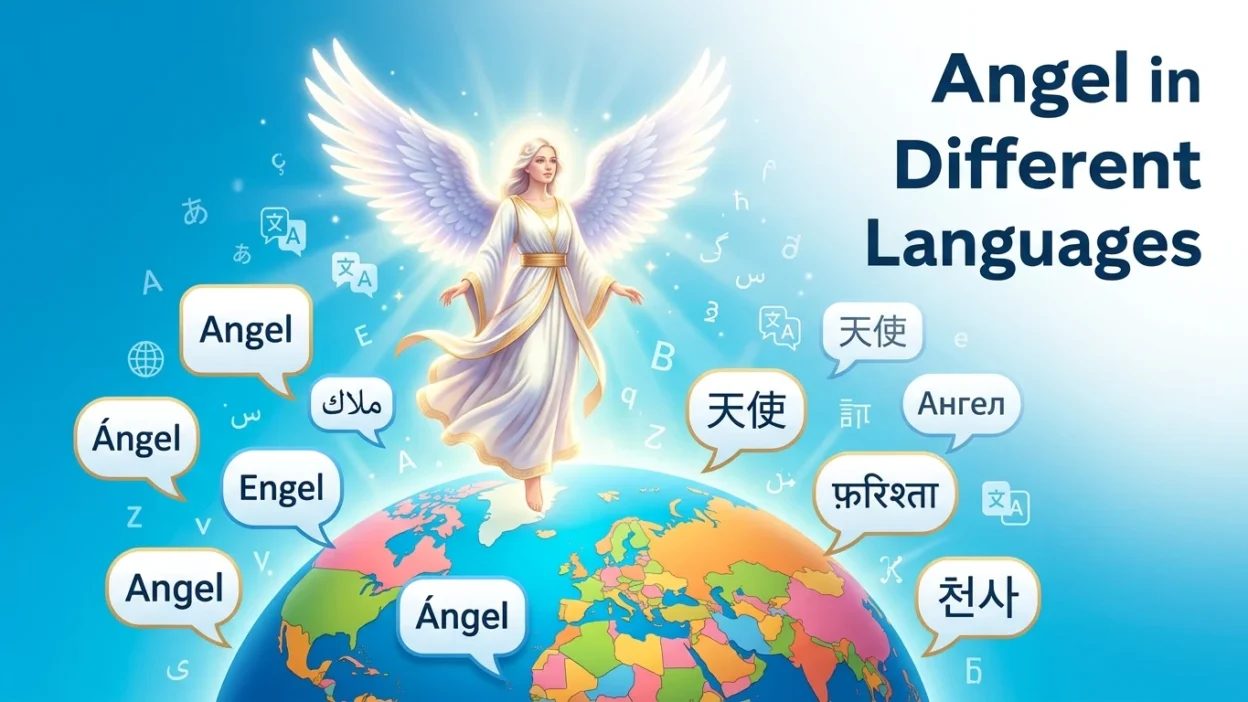
If you want to learn angel in different languages, this page features helpful ways to say the word correctly through accurate translation and translations. You can explore it in over 100 other languages, improve your vocabulary, and enjoy better language learning with this useful language guide.
It introduces global languages, shows how the same meaning is shared worldwide, and includes clear examples that make every lesson easier to understand. Whether you are a beginner or an experienced learner, this resource supports steady progress with reliable language translations and practical knowledge.
We invite you to listen to audio examples, practice the correct pronunciation, and hear native pronunciation to pronounce the word naturally in spoken languages.
You can also study its written form, read, compare, and remember it by repeating each example aloud. This pronunciation guide covers more than 40 languages, encourages multilingual communication, supports travel, inspires exploring new cultures, builds confidence, and helps you develop accurate pronunciation every day.
Angel in Different Languages Table
| Language | Translation | Pronunciation | Example Sentence | English Meaning |
|---|---|---|---|---|
| English | Angel | AYN-juhl | She is my guardian angel. | She protects me like an angel. |
| Spanish | Ángel | AHN-hel | Ella es un ángel. | She is an angel. |
| French | Ange | AHNZH | Tu es un ange. | You are an angel. |
| German | Engel | ENG-el | Du bist ein Engel. | You are an angel. |
| Italian | Angelo | AHN-je-lo | Lui è un angelo. | He is an angel. |
| Portuguese | Anjo | AHN-zhoo | Ela é um anjo. | She is an angel. |
| Dutch | Engel | ENG-el | Jij bent een engel. | You are an angel. |
| Swedish | Ängel | EN-yel | Hon är en ängel. | She is an angel. |
| Norwegian | Engel | ENG-el | Han er en engel. | He is an angel. |
| Danish | Engel | ENG-el | Du er en engel. | You are an angel. |
| Finnish | Enkeli | EN-ke-li | Hän on enkeli. | He or she is an angel. |
| Icelandic | Engill | EN-githl | Hún er engill. | She is an angel. |
| Irish | Aingeal | AN-gyal | Is aingeal í. | She is an angel. |
| Welsh | Angel | AN-gel | Mae hi’n angel. | She is an angel. |
| Scottish Gaelic | Aingeal | AN-gyal | Tha e na aingeal. | He is an angel. |
| Polish | Anioł | AN-yow | Ona jest aniołem. | She is an angel. |
| Czech | Anděl | AN-dyel | Jsi anděl. | You are an angel. |
| Slovak | Anjel | AN-yel | Si anjel. | You are an angel. |
| Slovenian | Angel | AN-gel | Ti si angel. | You are an angel. |
| Croatian | Anđeo | AN-jeh-oh | Ti si anđeo. | You are an angel. |
| Serbian | Анђео | AN-jeh-oh | Ти си анђео. | You are an angel. |
| Bosnian | Anđeo | AN-jeh-oh | Ona je anđeo. | She is an angel. |
| Romanian | Înger | EEN-jer | Ești un înger. | You are an angel. |
| Hungarian | Angyal | AHN-dyal | Te egy angyal vagy. | You are an angel. |
| Bulgarian | Ангел | AN-gel | Тя е ангел. | She is an angel. |
| Ukrainian | Ангел | AHN-hel | Він ангел. | He is an angel. |
| Russian | Ангел | AHN-gel | Она ангел. | She is an angel. |
| Belarusian | Анёл | AN-yol | Яна анёл. | She is an angel. |
| Greek | Άγγελος | ANG-ge-los | Είναι άγγελος. | He or she is an angel. |
| Albanian | Engjëll | EN-jell | Ajo është engjëll. | She is an angel. |
| Turkish | Melek | MEH-lek | O bir melek. | She is an angel. |
| Arabic | ملاك | MA-lak | هي ملاك. | She is an angel. |
| Hebrew | מלאך | Mal-AKH | הוא מלאך. | He is an angel. |
| Persian | فرشته | Fe-RESH-teh | او فرشته است. | She is an angel. |
| Urdu | فرشتہ | Farish-ta | وہ فرشتہ ہے۔ | She is an angel. |
| Hindi | फ़रिश्ता | Fa-rish-ta | वह फ़रिश्ता है। | She is an angel. |
| Punjabi | ਫ਼ਰਿਸ਼ਤਾ | Fa-rish-ta | ਉਹ ਫ਼ਰਿਸ਼ਤਾ ਹੈ। | She is an angel. |
| Bengali | ফেরেশতা | Fe-re-sh-ta | সে ফেরেশতা। | She is an angel. |
| Gujarati | ફરિશ્તો | Fa-rish-to | તે ફરિશ્તો છે. | He is an angel. |
| Marathi | देवदूत | Dev-doot | ती देवदूत आहे. | She is an angel. |
| Nepali | स्वर्गदूत | Swar-ga-doot | ऊ स्वर्गदूत हो। | She is an angel. |
| Sinhala | දේවදූතයා | De-va-doo-ta-ya | ඇය දේවදූතයෙක්. | She is an angel. |
| Tamil | தேவதை | De-va-thai | அவள் தேவதை. | She is an angel. |
| Telugu | దేవదూత | De-va-doo-ta | ఆమె దేవదూత. | She is an angel. |
| Kannada | ದೇವದೂತ | De-va-doo-ta | ಅವಳು ದೇವದೂತಳು. | She is an angel. |
| Malayalam | ദൂതൻ | DOO-than | അവൾ ഒരു ദൂതൻ ആണ്. | She is an angel. |
| Thai | นางฟ้า | Nang-FAH | เธอคือนางฟ้า | She is an angel. |
| Vietnamese | Thiên thần | TEE-en than | Cô ấy là thiên thần. | She is an angel. |
| Indonesian | Malaikat | Ma-LAI-kat | Dia malaikat. | She is an angel. |
| Malay | Malaikat | Ma-LAI-kat | Dia malaikat. | She is an angel. |
| Filipino | Anghel | ANG-hel | Isa kang anghel. | You are an angel. |
| Chinese (Simplified) | 天使 | Tyan-shrr | 她是天使。 | She is an angel. |
| Chinese (Traditional) | 天使 | Tyan-shrr | 她是天使。 | She is an angel. |
| Japanese | 天使 | TEN-shi | 彼女は天使です。 | She is an angel. |
| Korean | 천사 | CHUN-sa | 그녀는 천사예요. | She is an angel. |
| Mongolian | Тэнгэрэлч | TEN-ger-elch | Тэр тэнгэрэлч. | She is an angel. |
| Kazakh | Періште | Pe-rish-te | Ол періште. | She is an angel. |
| Uzbek | Farishta | Fa-rish-ta | U farishta. | She is an angel. |
| Azerbaijani | Mələk | Meh-LEK | O mələkdir. | She is an angel. |
| Georgian | ანგელოზი | An-ge-LO-zi | ის ანგელოზია. | She is an angel. |
| Armenian | Հրեշտակ | Hresh-tak | Նա հրեշտակ է։ | She is an angel. |
| Swahili | Malaika | Ma-lai-ka | Yeye ni malaika. | She is an angel. |
| Zulu | Ingelosi | In-ge-LO-si | Ungelosi. | You are an angel. |
| Xhosa | Ingelosi | In-ge-LO-si | Ungumngelosi. | You are an angel. |
| Afrikaans | Engel | ENG-el | Sy is ‘n engel. | She is an angel. |
| Yoruba | Áńgẹ́lì | AN-ge-li | Ó jẹ́ áńgẹ́lì. | She is an angel. |
| Igbo | Mmụo ozi | Mmoo-oh OH-zi | Ọ bụ mmụọ ozi. | She is an angel. |
| Hausa | Mala’ika | Ma-la-EE-ka | Ita mala’ika ce. | She is an angel. |
| Amharic | መልአክ | Mel-ak | እሷ መልአክ ናት። | She is an angel. |
| Latin | Angelus | AN-ge-lus | Angelus bonus est. | The angel is good. |
| Esperanto | Anĝelo | An-JE-lo | Vi estas anĝelo. | You are an angel. |
| Luxembourgish | Engel | ENG-el | Du bass en Engel. | You are an angel. |
How to Say Angel in Different Languages
The word angel in all languages often refers to a heavenly messenger, a spiritual being, or someone who is exceptionally kind and caring. While spellings and pronunciations differ, many European languages share similar forms because of their historical roots. In Asian, African, and Middle Eastern languages, the translations often reflect local religious and cultural traditions.
Learning how to say angel in different languages can help language learners improve vocabulary, understand global cultures, and communicate with people from different backgrounds.
Why Are Angel Translations Different?
Although the meaning remains similar, angel translations vary because languages evolved independently over thousands of years. Some languages borrowed the word from ancient Greek or Latin, while others developed unique native terms based on their religious texts and cultural history.
For example:
- Romance languages use forms similar to Ángel, Ange, or Angelo.
- Germanic languages commonly use Engel.
- South Asian languages often use words derived from Farishta or Devdoot.
- East Asian languages use native expressions that literally mean “heavenly messenger.
Angel Around the World
The concept of an angel is recognized across many religions and cultures. In Christianity, Judaism, and Islam, angels are divine messengers. In literature and everyday speech, calling someone an “angel” usually means they are compassionate, generous, or beautiful.
Understanding angel around the world helps you appreciate both linguistic diversity and the shared human appreciation for kindness and spiritual symbolism.
Tips for Learning Angel in Different Languages
- Practice the pronunciation aloud every day.
- Memorize translations by language family.
- Use the example sentences in conversations.
- Listen to native speakers for accurate pronunciation.
- Review the table regularly to improve long-term memory.
Conclusion
Learning angel in different languages is a great way to expand your vocabulary while exploring cultures from every continent. If you’re studying languages, writing creatively, traveling, or simply curious, these 70 translations make it easy to understand how people express this meaningful word across the world.
FAQs:
1. How do you say angel in different languages?
The word changes depending on the language. For example, it is Ángel in Spanish, Ange in French, Engel in German, Melek in Turkish, and Tenshi in Japanese.
2. What is the most common translation of angel around the world?
Many European languages use words derived from the ancient Greek and Latin forms, such as Angel, Ange, Ángel, Angelo, and Engel.
3. Why do angel translations differ between languages?
Languages have different histories, religious influences, and writing systems, leading to unique words while keeping the same basic meaning.
4. Is the meaning of angel the same in all languages?
Generally yes. In most languages, the word refers to a heavenly messenger or a kind and caring person, though cultural interpretations may vary.
5. Can learning angel in all languages improve language skills?
Yes. Learning common vocabulary across multiple languages helps improve memory, pronunciation, cultural awareness, and comparative language learning.