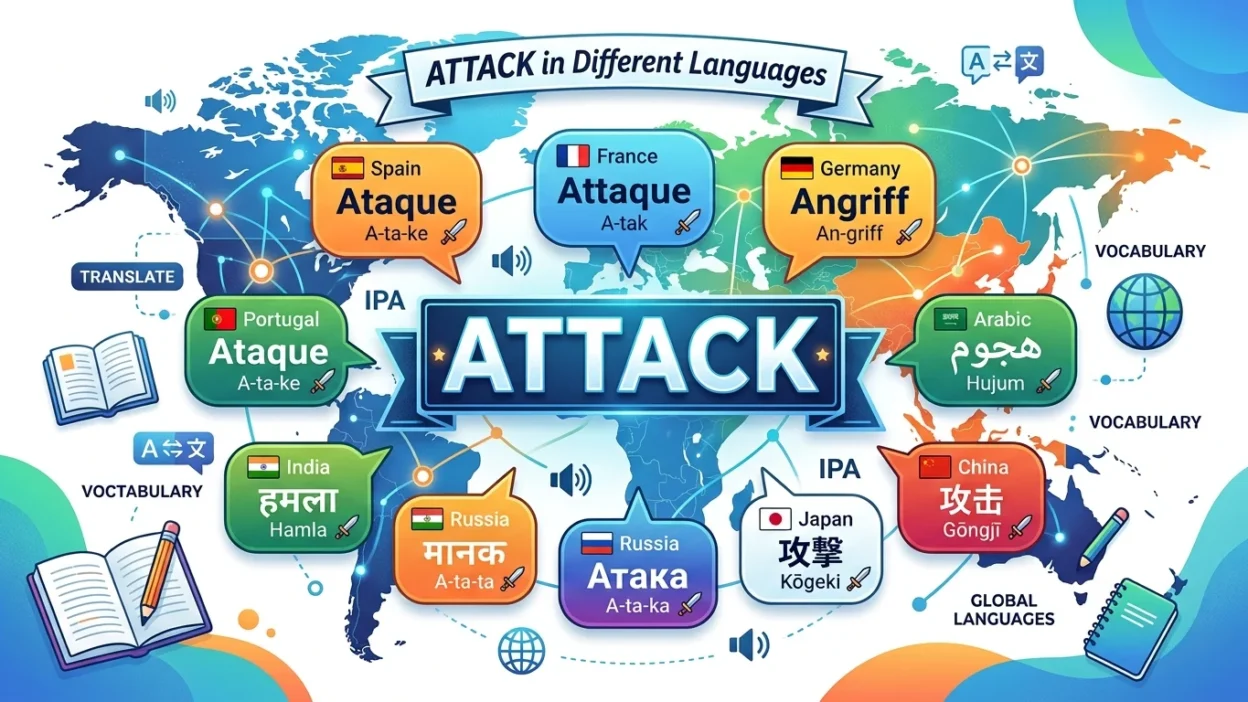
Learning attack in different languages can be an interesting way to improve language learning and expand your vocabulary. By comparing the word across different cultures and regions, learners can discover new ways to say, read, and pronounce it correctly.
A helpful page often features a translation, multiple translations, and audio support. Following a pronunciation guide and practicing each phrase makes it easier to remember the term in a new language. I have personally found that hearing native speakers use the word improves understanding much faster than memorization alone.
Many online resources provide attack translations in over 100 languages. Whether you want to learn how to say attack, compare a native phrase, or explore attack in all languages, these tools strengthen communication skills and reveal important linguistic differences found around the world.
Studying attack around the world through a multilingual collection of terms offers insight into global and worldwide language use. Listening to speakers, practicing pronunciation, and observing cross-cultural language patterns can greatly improve modern communication and language awareness.
Attack in Different Languages Table
| Language | Translation | Pronunciation | Example Sentence | English Meaning |
|---|---|---|---|---|
| English | Attack | uh-tak | The soldiers attack at dawn. | The soldiers attack at dawn. |
| Spanish | Ataque | ah-TAH-keh | El ejército lanzó un ataque. | The army launched an attack. |
| French | Attaque | ah-tak | L’armée prépare une attaque. | The army is preparing an attack. |
| German | Angriff | AHN-griff | Der Angriff begann früh. | The attack began early. |
| Italian | Attacco | at-TAK-ko | L’attacco è iniziato. | The attack has started. |
| Portuguese | Ataque | ah-TAH-kee | O ataque começou. | The attack started. |
| Dutch | Aanval | AAN-val | De aanval begon snel. | The attack began quickly. |
| Swedish | Attack | at-TAK | Attacken började. | The attack started. |
| Norwegian | Angrep | AHNG-rep | Angrepet startet. | The attack started. |
| Danish | Angreb | AHNG-greb | Angrebet begyndte. | The attack began. |
| Finnish | Hyökkäys | HYUHK-ka-ys | Hyökkäys alkoi. | The attack began. |
| Polish | Atak | AH-tak | Atak rozpoczął się. | The attack started. |
| Czech | Útok | OO-tok | Útok začal. | The attack began. |
| Slovak | Útok | OO-tok | Útok sa začal. | The attack started. |
| Hungarian | Támadás | TAA-maa-dash | A támadás megkezdődött. | The attack commenced. |
| Romanian | Atac | ah-TAK | Atacul a început. | The attack began. |
| Bulgarian | Атака | ah-TA-ka | Атаката започна. | The attack started. |
| Serbian | Напад | NA-pad | Напад је почео. | The attack began. |
| Croatian | Napad | NA-pad | Napad je počeo. | The attack started. |
| Slovenian | Napad | NA-pad | Napad se je začel. | The attack started. |
| Russian | Атака | ah-TA-ka | Атака началась. | The attack began. |
| Ukrainian | Атака | ah-TA-ka | Атака почалася. | The attack started. |
| Belarusian | Атака | ah-TA-ka | Атака пачалася. | The attack started. |
| Greek | Επίθεση | eh-PEE-theh-see | Η επίθεση άρχισε. | The attack began. |
| Turkish | Saldırı | sal-duh-RUH | Saldırı başladı. | The attack started. |
| Arabic | هجوم | hu-JOOM | بدأ الهجوم. | The attack began. |
| Hebrew | התקפה | hat-ka-FAH | ההתקפה החלה. | The attack started. |
| Persian | حمله | ham-LEH | حمله آغاز شد. | The attack began. |
| Urdu | حملہ | HAM-la | حملہ شروع ہوا۔ | The attack started. |
| Hindi | हमला | HAM-la | हमला शुरू हुआ। | The attack started. |
| Bengali | আক্রমণ | AH-kro-mon | আক্রমণ শুরু হয়েছে। | The attack has begun. |
| Punjabi | ਹਮਲਾ | HAM-la | ਹਮਲਾ ਸ਼ੁਰੂ ਹੋਇਆ। | The attack started. |
| Gujarati | હુમલો | HOOM-lo | હુમલો શરૂ થયો. | The attack started. |
| Marathi | हल्ला | HAL-la | हल्ला सुरू झाला. | The attack started. |
| Tamil | தாக்குதல் | THAAK-ku-thal | தாக்குதல் தொடங்கியது. | The attack started. |
| Telugu | దాడి | DAA-di | దాడి ప్రారంభమైంది. | The attack started. |
| Kannada | ದಾಳಿ | DAA-li | ದಾಳಿ ಆರಂಭವಾಯಿತು. | The attack started. |
| Malayalam | ആക്രമണം | aa-kra-ma-nam | ആക്രമണം തുടങ്ങി. | The attack started. |
| Sinhala | ප්රහාරය | pra-HAA-ra-ya | ප්රහාරය ආරම්භ විය. | The attack started. |
| Nepali | आक्रमण | aa-kra-man | आक्रमण सुरु भयो। | The attack began. |
| Chinese (Simplified) | 攻击 | gong-jee | 攻击开始了。 | The attack started. |
| Chinese (Traditional) | 攻擊 | gong-jee | 攻擊開始了。 | The attack started. |
| Japanese | 攻撃 | koh-geki | 攻撃が始まった。 | The attack began. |
| Korean | 공격 | gong-gyok | 공격이 시작됐다. | The attack started. |
| Vietnamese | Tấn công | tun-kong | Cuộc tấn công bắt đầu. | The attack began. |
| Thai | การโจมตี | gaan-joe-mee-tee | การโจมตีเริ่มขึ้น | The attack started. |
| Indonesian | Serangan | seh-RA-ngan | Serangan dimulai. | The attack began. |
| Malay | Serangan | seh-RA-ngan | Serangan bermula. | The attack began. |
| Filipino | Pag-atake | pag-ah-TA-ke | Nagsimula ang pag-atake. | The attack started. |
| Mongolian | Довтолгоо | dov-tol-GOH | Довтолгоо эхэлсэн. | The attack started. |
| Khmer | ការវាយប្រហារ | ka-vai-pro-ha | ការវាយប្រហារបានចាប់ផ្តើម។ | The attack started. |
| Lao | ການໂຈມຕີ | gaan-jom-tee | ການໂຈມຕີເລີ່ມແລ້ວ. | The attack started. |
| Burmese | တိုက်ခိုက်မှု | tai-kite-mu | တိုက်ခိုက်မှုစတင်သည်။ | The attack started. |
| Swahili | Shambulio | sham-BOO-lee-oh | Shambulio lilianza. | The attack began. |
| Zulu | Ukuhlasela | oo-koo-hla-SEH-la | Ukuhlasela kuqalile. | The attack started. |
| Afrikaans | Aanval | AAN-fal | Die aanval het begin. | The attack began. |
| Somali | Weerar | wee-RAAR | Weerarku wuu bilowday. | The attack started. |
| Amharic | ጥቃት | ti-KAT | ጥቃቱ ተጀመረ። | The attack began. |
| Hausa | Hari | HA-ree | Harin ya fara. | The attack started. |
| Yoruba | Ikọlu | ee-KO-lu | Ikọlu bẹrẹ. | The attack started. |
| Igbo | Mwakpo | mwa-KPO | Mwakpo amalitela. | The attack started. |
| Maori | Whakaeke | fa-kai-ke | I timata te whakaeke. | The attack began. |
| Samoan | Osofaiga | o-so-FAI-ga | Ua amata le osofaiga. | The attack started. |
| Hawaiian | Hoʻouka | ho-oh-OO-ka | Ua hoʻomaka ka hoʻouka. | The attack started. |
| Irish | Ionsaí | UN-see | Thosaigh an t-ionsaí. | The attack began. |
| Welsh | Ymosodiad | uh-mo-SOD-yad | Dechreuodd yr ymosodiad. | The attack began. |
| Scottish Gaelic | Ionnsaigh | YON-sigh | Thòisich an ionnsaigh. | The attack started. |
| Icelandic | Árás | AU-ras | Árásin hófst. | The attack began. |
| Latvian | Uzbrukums | ooz-BROO-kums | Uzbrukums sākās. | The attack started. |
| Lithuanian | Ataka | ah-TA-ka | Ataka prasidėjo. | The attack began. |
| Estonian | Rünnak | RUN-nak | Rünnak algas. | The attack started. |
| Albanian | Sulm | SOOLM | Sulmi filloi. | The attack began. |
| Basque | Erasoa | eh-ra-SO-a | Erasoa hasi zen. | The attack began. |
How to Say Attack in Different Languages
The translation of attack varies depending on the language and cultural context. In many languages, the word is commonly used in military, sports, strategic, and security-related discussions. Learning these terms can improve vocabulary, translation accuracy, and communication skills.
Attack Translations Around the World
As shown above, many languages use words that sound similar due to historical linguistic influences. For example, Romance languages such as Spanish, French, Italian, and Portuguese have closely related forms. Other language families use entirely different words that reflect their unique linguistic roots.
Why Learn Attack in All Languages?
Understanding attack in all languages can be useful for language learners, translators, students, international professionals, and researchers. It also helps improve cross-cultural awareness and vocabulary retention when studying multiple languages at once.
Common Uses of the Word Attack
The word attack may appear in several contexts:
- Military operations
- Sports strategies
- Cybersecurity discussions
- Self-defense training
- Historical studies
- News reporting
Knowing the correct translation helps ensure clear communication in each situation.
Conclusion
Learning attack in different languages is a practical way to expand your global vocabulary. With these 70 translations, pronunciations, and examples, you can better understand how this commonly used word is expressed around the world and use it more confidently in multilingual conversations.
FAQs:
1. How do you say attack in different languages?
The word attack has different translations depending on the language, such as Ataque in Spanish, Attaque in French, Angriff in German, and 攻击 in Chinese.
2. What is the most common translation of attack worldwide?
Many European languages use similar forms derived from Latin roots, such as Ataque, Attaque, and Attacco.
3. Why should I learn attack translations?
Learning attack translations helps improve language skills, translation accuracy, and international communication.
4. Are attack translations the same in every language?
No. While some languages share similar words, many have unique native terms based on their linguistic history.
5. Where can I use these attack translations?
These translations can be useful for education, travel, language learning, translation work, research, and cultural studies.