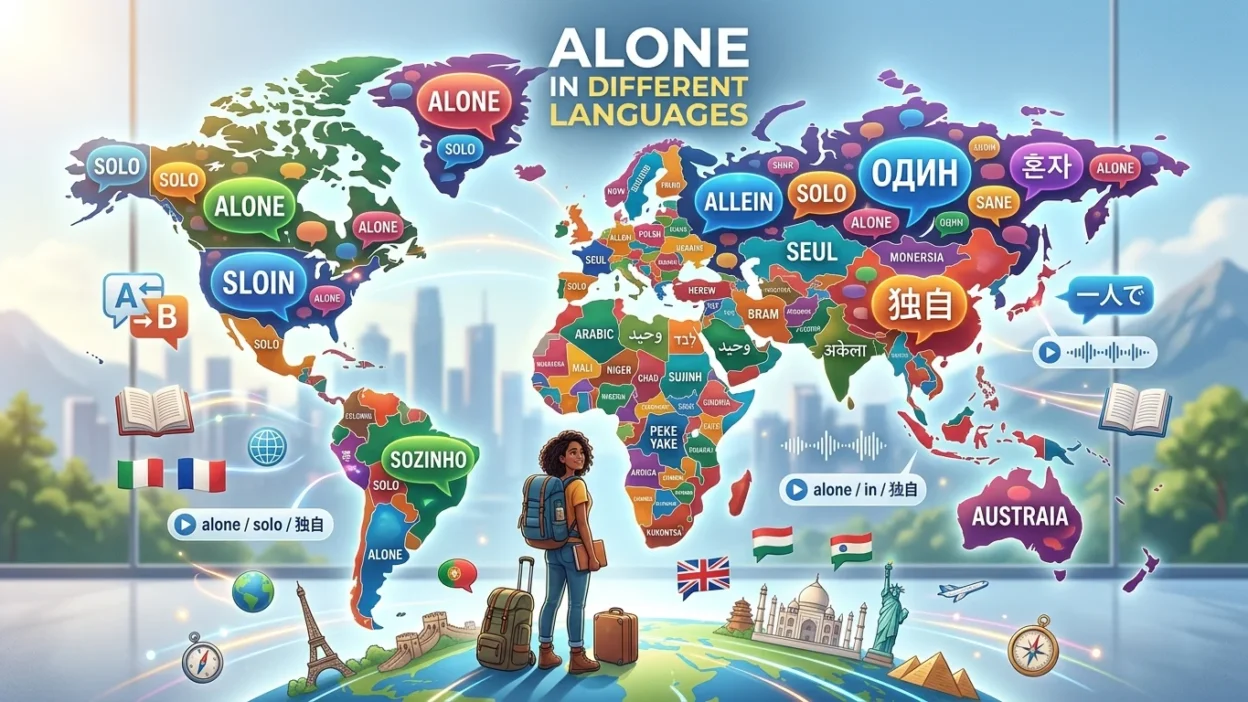
Learning alone in different languages is an interesting way to explore how a simple word can carry different shades of meaning across cultures. Every translated word, native word, and expression reflects unique wording and traditions.
Through language learning, multilingual learners expand their vocabulary, study translations, understand a phrase, and compare languages from different regions. This improves communication, understanding, and confidence in speaking, while also helping learners appreciate the connection between language and culture.
A useful language guide or language translation page makes it easier to learn, read, listen, and pronounce words accurately. Modern language resources often provide audio, audio pronunciation, word pronunciation, language pronunciation, and a complete pronunciation guide.
These tools support both spoken languages and written languages, especially when studying foreign languages. A featured page may include over 100 examples from international and worldwide sources, while more than 40 recordings improve pronunciation and reading practice.
Alone in Different Languages Table
| Language | Native Phrase | Pronunciation | Example Sentence | English Meaning |
|---|---|---|---|---|
| English | Alone | uh-lohn | I am alone today. | I am by myself today. |
| Spanish | Solo | soh-loh | Estoy solo hoy. | I am alone today. |
| French | Seul | suhl | Je suis seul. | I am alone. |
| German | Allein | ah-line | Ich bin allein. | I am alone. |
| Italian | Solo | soh-loh | Sono solo. | I am alone. |
| Portuguese | Sozinho | soh-zeen-yoo | Estou sozinho. | I am alone. |
| Dutch | Alleen | ah-lane | Ik ben alleen. | I am alone. |
| Swedish | Ensam | en-sam | Jag är ensam. | I am alone. |
| Norwegian | Alene | ah-leh-neh | Jeg er alene. | I am alone. |
| Danish | Alene | ah-leh-neh | Jeg er alene. | I am alone. |
| Finnish | Yksin | uuk-sin | Olen yksin. | I am alone. |
| Icelandic | Einn | aytn | Ég er einn. | I am alone. |
| Russian | Один | ah-deen | Я один. | I am alone. |
| Ukrainian | Сам | sahm | Я сам. | I am alone. |
| Polish | Sam | sahm | Jestem sam. | I am alone. |
| Czech | Sám | saam | Jsem sám. | I am alone. |
| Slovak | Sám | saam | Som sám. | I am alone. |
| Hungarian | Egyedül | eh-dye-dool | Egyedül vagyok. | I am alone. |
| Romanian | Singur | seen-goor | Sunt singur. | I am alone. |
| Bulgarian | Сам | sahm | Аз съм сам. | I am alone. |
| Serbian | Сам | sahm | Ја сам сам. | I am alone. |
| Croatian | Sam | sahm | Ja sam sam. | I am alone. |
| Bosnian | Sam | sahm | Ja sam sam. | I am alone. |
| Slovenian | Sam | sahm | Sem sam. | I am alone. |
| Greek | Μόνος | mo-nos | Είμαι μόνος. | I am alone. |
| Turkish | Yalnız | yal-nuz | Yalnızım. | I am alone. |
| Arabic | وحيد | wa-heed | أنا وحيد. | I am alone. |
| Hebrew | לבד | leh-vad | אני לבד. | I am alone. |
| Persian | تنها | tan-ha | من تنها هستم. | I am alone. |
| Urdu | اکیلا | ake-la | میں اکیلا ہوں۔ | I am alone. |
| Hindi | अकेला | ah-kay-la | मैं अकेला हूँ। | I am alone. |
| Bengali | একা | eh-ka | আমি একা। | I am alone. |
| Punjabi | ਇਕੱਲਾ | ik-kal-la | ਮੈਂ ਇਕੱਲਾ ਹਾਂ। | I am alone. |
| Gujarati | એકલો | ek-lo | હું એકલો છું. | I am alone. |
| Marathi | एकटा | ek-ta | मी एकटा आहे. | I am alone. |
| Tamil | தனியாக | tha-ni-yaa-ga | நான் தனியாக இருக்கிறேன். | I am alone. |
| Telugu | ఒంటరిగా | on-ta-ri-ga | నేను ఒంటరిగా ఉన్నాను. | I am alone. |
| Kannada | ಒಬ್ಬಂಟಿ | ob-ban-ti | ನಾನು ಒಬ್ಬಂಟಿ. | I am alone. |
| Malayalam | ഒറ്റയ്ക്ക് | ot-ta-yk | ഞാൻ ഒറ്റയ്ക്ക് ആണ്. | I am alone. |
| Sinhala | තනිව | tha-ni-va | මම තනිව සිටිමි. | I am alone. |
| Nepali | एक्लो | ek-lo | म एक्लो छु। | I am alone. |
| Chinese (Mandarin) | 独自 | doo-zuh | 我独自一人。 | I am alone. |
| Cantonese | 獨自 | duk-ji | 我獨自一人。 | I am alone. |
| Japanese | 一人で | hee-toh-ri de | 私は一人です。 | I am alone. |
| Korean | 혼자 | hon-ja | 저는 혼자예요. | I am alone. |
| Vietnamese | Một mình | mot minh | Tôi một mình. | I am alone. |
| Thai | คนเดียว | kon-diao | ฉันอยู่คนเดียว. | I am alone. |
| Indonesian | Sendiri | sen-dee-ree | Saya sendiri. | I am alone. |
| Malay | Bersendirian | ber-sen-di-ri-an | Saya bersendirian. | I am alone. |
| Filipino | Mag-isa | mag-ee-sa | Mag-isa ako. | I am alone. |
| Khmer | ម្នាក់ឯង | mneak-aeng | ខ្ញុំនៅម្នាក់ឯង។ | I am alone. |
| Lao | ຄົນດຽວ | khon-diao | ຂ້ອຍຢູ່ຄົນດຽວ. | I am alone. |
| Burmese | တစ်ယောက်တည်း | ta-yout-te | ကျွန်ုပ်တစ်ယောက်တည်း။ | I am alone. |
| Mongolian | Ганцаараа | gan-tsaa-raa | Би ганцаараа. | I am alone. |
| Swahili | Peke yangu | peh-keh yan-goo | Niko peke yangu. | I am alone. |
| Zulu | Ngedwa | nge-dwa | Ngingedwa. | I am alone. |
| Xhosa | Ndedwa | nde-dwa | Ndidwa ndedwa. | I am alone. |
| Afrikaans | Alleen | ah-lane | Ek is alleen. | I am alone. |
| Somali | Kaligay | ka-li-gay | Waxaan ahay kaligay. | I am alone. |
| Amharic | ብቻ | bi-cha | እኔ ብቻ ነኝ። | I am alone. |
| Yoruba | Nikan | nee-kan | Mo wa nikan. | I am alone. |
| Igbo | Naanị | naa-nee | Anọ m naanị. | I am alone. |
| Hausa | Ni kaɗai | nee ka-dai | Ina ni kaɗai. | I am alone. |
| Latvian | Viens | vee-ens | Es esmu viens. | I am alone. |
| Lithuanian | Vienas | vee-eh-nas | Aš esu vienas. | I am alone. |
| Estonian | Üksi | uuk-see | Ma olen üksi. | I am alone. |
| Albanian | Vetëm | veh-tem | Jam vetëm. | I am alone. |
| Macedonian | Сам | sahm | Јас сум сам. | I am alone. |
| Georgian | მარტო | mar-to | მე მარტო ვარ. | I am alone. |
| Armenian | Մենակ | meh-nak | Ես մենակ եմ։ | I am alone. |
| Azerbaijani | Tək | tek | Mən təkəm. | I am alone. |
| Kazakh | Жалғыз | zhal-guz | Мен жалғызбын. | I am alone. |
| Uzbek | Yolg’iz | yol-giz | Men yolg’izman. | I am alone. |
How to Say Alone in Different Languages
The word “alone” is used when someone is by themselves without other people nearby. While the meaning is similar across cultures, each language has its own unique pronunciation and writing system. Learning these translations can improve communication and expand your multilingual vocabulary.
Why Learn Alone Translations?
Understanding alone translations can be helpful for:
- Traveling internationally
- Learning new languages
- Reading foreign books and media
- Understanding cultural expressions
- Building multilingual vocabulary
Many language learners begin with common everyday words like “alone” because they appear frequently in conversations and written content.
Alone Around the World
The concept of being alone exists in every culture. Some languages use a direct translation, while others may have several words depending on whether someone is physically alone, emotionally lonely, or living independently. Knowing these differences helps learners understand both language and culture more deeply.
Common Uses of the Word Alone
People use the word “alone” in many situations:
- Living alone
- Traveling alone
- Studying alone
- Spending time alone
- Feeling alone emotionally
Understanding these contexts makes it easier to use the correct translation when speaking another language.
Conclusion
Learning alone in different languages is a great way to expand your vocabulary and understand how cultures around the world express independence and solitude. If you’re studying languages, traveling internationally, or simply curious, these 70 translations provide a useful reference for everyday communication.
FAQs:
1. How do you say alone in different languages?
You can say alone as Solo (Spanish), Seul (French), Allein (German), Yalnız (Turkish), and 一人で (Japanese), among many others.
2. What is the most common translation of alone around the world?
Many languages use a single word meaning “by oneself,” such as Solo, Allein, Sam, or Sendiri.
3. Why are there different translations for alone?
Languages develop unique vocabulary based on culture, grammar, and historical influences.
4. Is alone the same as lonely in every language?
No. Many languages have separate words for being physically alone and feeling emotionally lonely.
5. Where can I use these alone translations?
You can use them while traveling, learning languages, communicating internationally, or studying multilingual vocabulary.