
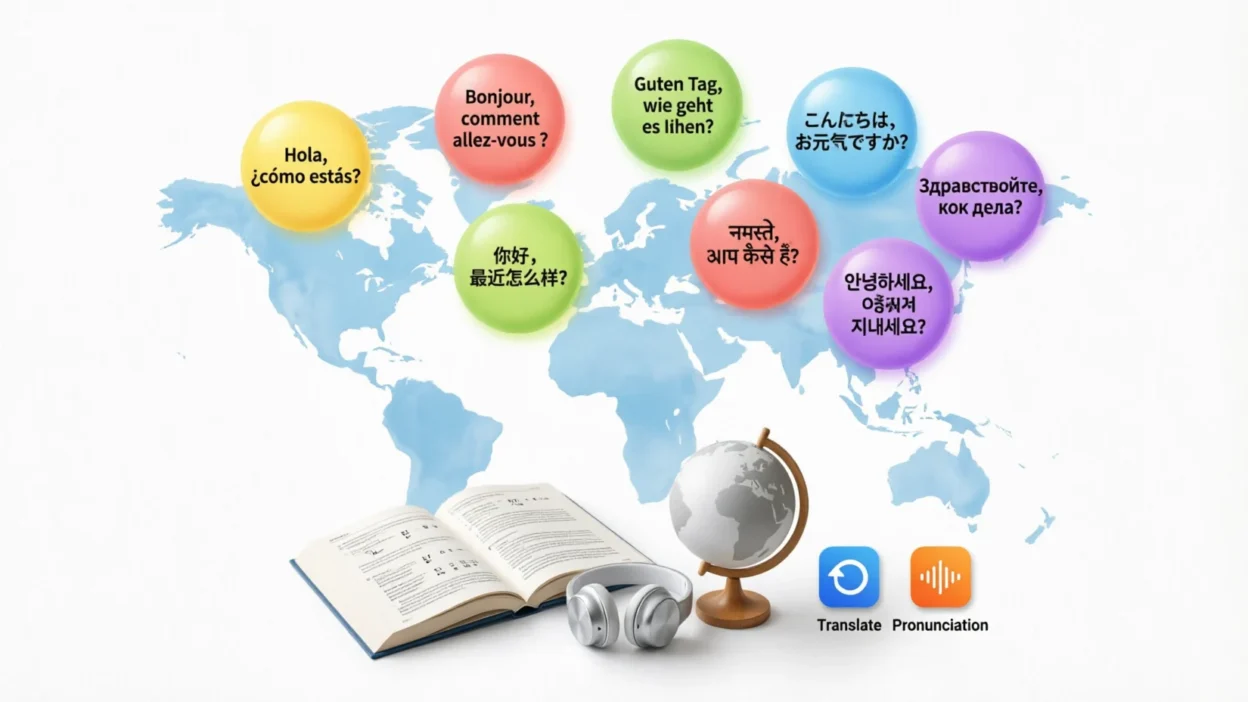
Learning shut up in different languages involves much more than memorizing a single word or native phrase. The word meaning, phrase meaning, and local expression often change based on culture and situation.
A phrase that sounds normal in one language may seem rude in another, which is why checking a translation, multiple translations, and how a phrase is translated can be helpful. Through language learning, I noticed that using a trusted translation page, featured translation, or large translation collection improved real conversations and strengthened cultural understanding.
Exploring other languages, international languages, foreign languages, spoken languages, and global languages helps learners understand a multilingual phrase used worldwide and around the world.
This supports better global communication, builds language knowledge, improves language skills, and encourages language exploration through language examples, pronunciation practice, audio pronunciation, speech learning, vocabulary, linguistic research, and linguistics.
Shut Up in Different Languages Table
| Language | Native Phrase | Pronunciation | Example Sentence | English Meaning |
| English | Shut up | shut up | Shut up for a minute. | Be quiet for a minute. |
| Spanish | Cállate | kai-ya-te | Cállate un momento. | Be quiet for a moment. |
| French | Tais-toi | tay-twa | Tais-toi maintenant. | Be quiet now. |
| German | Halt den Mund | halt den moond | Halt den Mund bitte. | Be quiet please. |
| Italian | Stai zitto | stai tseet-to | Stai zitto un attimo. | Be quiet for a second. |
| Portuguese | Cala a boca | ka-la a bo-ka | Cala a boca agora. | Be quiet now. |
| Dutch | Hou je mond | how ye mond | Hou je mond even. | Be quiet for a moment. |
| Russian | Замолчи | za-mol-chee | Замолчи сейчас. | Be quiet now. |
| Ukrainian | Замовкни | za-mov-knee | Замовкни на хвилину. | Be quiet for a minute. |
| Polish | Zamknij się | zam-kneesh shay | Zamknij się teraz. | Be quiet now. |
| Czech | Mlč | mlch | Mlč chvíli. | Be quiet for a while. |
| Slovak | Mlč | mlch | Mlč prosím. | Be quiet please. |
| Hungarian | Fogd be | fogd beh | Fogd be most. | Be quiet now. |
| Romanian | Taci | ta-chee | Taci puțin. | Be quiet a little. |
| Bulgarian | Млъкни | mluk-nee | Млъкни за малко. | Be quiet for a bit. |
| Greek | Σκάσε | ska-se | Σκάσε τώρα. | Be quiet now. |
| Turkish | Sus | soos | Sus biraz. | Be quiet for a bit. |
| Arabic | اصمت | us-mut | اصمت قليلاً | Be quiet for a little while. |
| Hebrew | שתוק | she-tok | שתוק רגע | Be quiet for a moment. |
| Persian | ساکت باش | sa-ket bash | ساکت باش لطفاً | Please be quiet. |
| Urdu | چپ رہو | chup raho | چپ رہو ذرا | Be quiet for a moment. |
| Hindi | चुप रहो | chup raho | चुप रहो थोड़ी देर | Be quiet for a while. |
| Punjabi | ਚੁੱਪ ਰਹੋ | chup raho | ਚੁੱਪ ਰਹੋ ਜੀ | Please be quiet. |
| Bengali | চুপ থাকো | chup thako | চুপ থাকো একটু | Be quiet a little. |
| Gujarati | ચુપ રહો | chup raho | ચુપ રહો થોડું | Be quiet a little. |
| Marathi | गप्प बसा | gapp basa | गप्प बसा जरा | Be quiet for a moment. |
| Tamil | அமைதியாக இரு | amaithiyaga iru | அமைதியாக இரு | Stay quiet. |
| Telugu | నిశ్శబ్దంగా ఉండు | nishabdanga undu | నిశ్శబ్దంగా ఉండు | Stay quiet. |
| Kannada | ಮೌನವಾಗಿರು | mounavagiru | ಮೌನವಾಗಿರು ಸ್ವಲ್ಪ | Stay quiet for a while. |
| Malayalam | മിണ്ടാതിരിക്ക് | mindathirikku | മിണ്ടാതിരിക്ക് കുറച്ചു | Stay quiet for a bit. |
| Sinhala | කට වහගන්න | kata wahaganna | කට වහගන්න ටිකක් | Be quiet for a while. |
| Nepali | चुप लाग | chup laga | चुप लाग | Be quiet. |
| Chinese (Mandarin) | 闭嘴 | bee-zway | 闭嘴一下 | Be quiet for a second. |
| Cantonese | 收聲 | sau seng | 收聲啦 | Be quiet. |
| Japanese | 黙れ | da-ma-re | 黙れよ | Be quiet. |
| Korean | 조용히 해 | jo-yong-hi hae | 조용히 해 | Be quiet. |
| Vietnamese | Im đi | eem dee | Im đi một chút | Be quiet for a moment. |
| Thai | หุบปาก | hoop pak | หุบปากก่อน | Be quiet first. |
| Indonesian | Diam | dee-am | Diam dulu | Be quiet first. |
| Malay | Diam | dee-am | Diam sekejap | Be quiet for a moment. |
| Filipino | Tumahimik ka | tu-ma-hi-mik ka | Tumahimik ka muna | Be quiet first. |
| Swahili | Nyamaza | nya-ma-za | Nyamaza kidogo | Be quiet a little. |
| Afrikaans | Bly stil | blay stil | Bly stil asseblief | Please be quiet. |
| Zulu | Thula | too-la | Thula kancane | Be quiet a little. |
| Xhosa | Thula | too-la | Thula ngoku | Be quiet now. |
| Yoruba | Dakẹ | da-keh | Dakẹ jọ̀wọ́ | Please be quiet. |
| Igbo | Gbachi nkịtị | gba-chee nkee-tee | Gbachi nkịtị | Be quiet. |
| Hausa | Yi shiru | yee shee-roo | Yi shiru mana | Please be quiet. |
| Amharic | ዝም በል | zim bel | ዝም በል | Be quiet. |
| Somali | Aamus | aa-mus | Aamus fadlan | Please be quiet. |
| Danish | Hold kæft | hold keft | Hold kæft lidt | Be quiet for a bit. |
| Swedish | Håll käften | hol kef-ten | Håll käften nu | Be quiet now. |
| Norwegian | Hold kjeft | hol sheft | Hold kjeft litt | Be quiet for a bit. |
| Finnish | Ole hiljaa | o-le hil-ya | Ole hiljaa hetki | Be quiet for a moment. |
| Icelandic | Þegiðu | they-ee-thu | Þegiðu aðeins | Be quiet for a bit. |
| Estonian | Ole vait | o-le vait | Ole vait korraks | Be quiet briefly. |
| Latvian | Klusē | klu-seh | Klusē lūdzu | Please be quiet. |
| Lithuanian | Tylėk | ti-lek | Tylėk dabar | Be quiet now. |
| Albanian | Hesht | hesht | Hesht pak | Be quiet a little. |
| Serbian | Ћути | chu-ti | Ћути мало | Be quiet for a bit. |
| Croatian | Šuti | shu-ti | Šuti malo | Be quiet a little. |
| Bosnian | Šuti | shu-ti | Šuti sada | Be quiet now. |
| Slovenian | Utihni | oo-tih-nee | Utihni zdaj | Be quiet now. |
| Macedonian | Замолчи | za-mol-chee | Замолчи сега | Be quiet now. |
| Georgian | გაჩუმდი | ga-choom-dee | გაჩუმდი ახლა | Be quiet now. |
| Armenian | Լռիր | lrrir | Լռիր մի պահ | Be quiet for a moment. |
| Azerbaijani | Sus | soos | Sus bir az | Be quiet a little. |
| Kazakh | Үндеме | un-de-me | Үндеме қазір | Be quiet now. |
| Uzbek | Jim bo’l | jim bol | Jim bo’l iltimos | Please be quiet. |
| Mongolian | Чимээгүй бай | chi-me-gui bai | Чимээгүй бай | Stay quiet. |
| Lao | ມິດໄວ້ | mit wai | ມິດໄວ້ແດ່ | Please stay quiet. |
How to Say Shut Up in Different Languages
The phrase “shut up” is translated differently around the world. Some languages use direct commands, while others prefer softer expressions that simply mean “be quiet.” The meaning often depends on tone, culture, and context.
Shut Up in All Languages: Cultural Differences
Not every language uses a harsh equivalent of “shut up.” In many cultures, polite alternatives are preferred, especially when speaking to elders, teachers, or strangers. Learning these differences helps avoid misunderstandings and promotes respectful communication.
Common Situations Where People Use Shut Up Translations
People may use shut up translations when:
- Learning foreign languages
- Traveling abroad
- Watching international movies
- Understanding native speakers
- Studying cultural expressions
- Comparing phrases around the world
Is “Shut Up” Considered Rude?
Yes, in many situations “shut up” can sound rude or offensive. A more polite alternative is usually “please be quiet” or “could you lower your voice?” When using shut up in different languages, always consider the relationship, setting, and local customs.
Conclusion
Learning shut up in different languages is an interesting way to explore global communication and cultural differences. While the phrase exists in nearly every language, its tone and usage vary widely. Understanding these translations can improve language skills and help you communicate more effectively around the world.
FAQs:
1. How do you say shut up in different languages?
You can say shut up in different languages using phrases such as Cállate (Spanish), Tais-toi (French), Sus (Turkish), and 闭嘴 (Chinese).
2. What is the most common translation of shut up around the world?
Most languages have a direct equivalent that means either “be quiet” or “stop talking.”
3. Is shut up rude in every language?
Not always. Some translations are very strong, while others are mild and simply mean “stay quiet.”
4. Why do people search for shut up translations?
People often search for shut up translations for language learning, travel, entertainment, and cultural knowledge.
5. What is a polite alternative to shut up?
A polite alternative is “please be quiet” or “could you speak more softly?”